
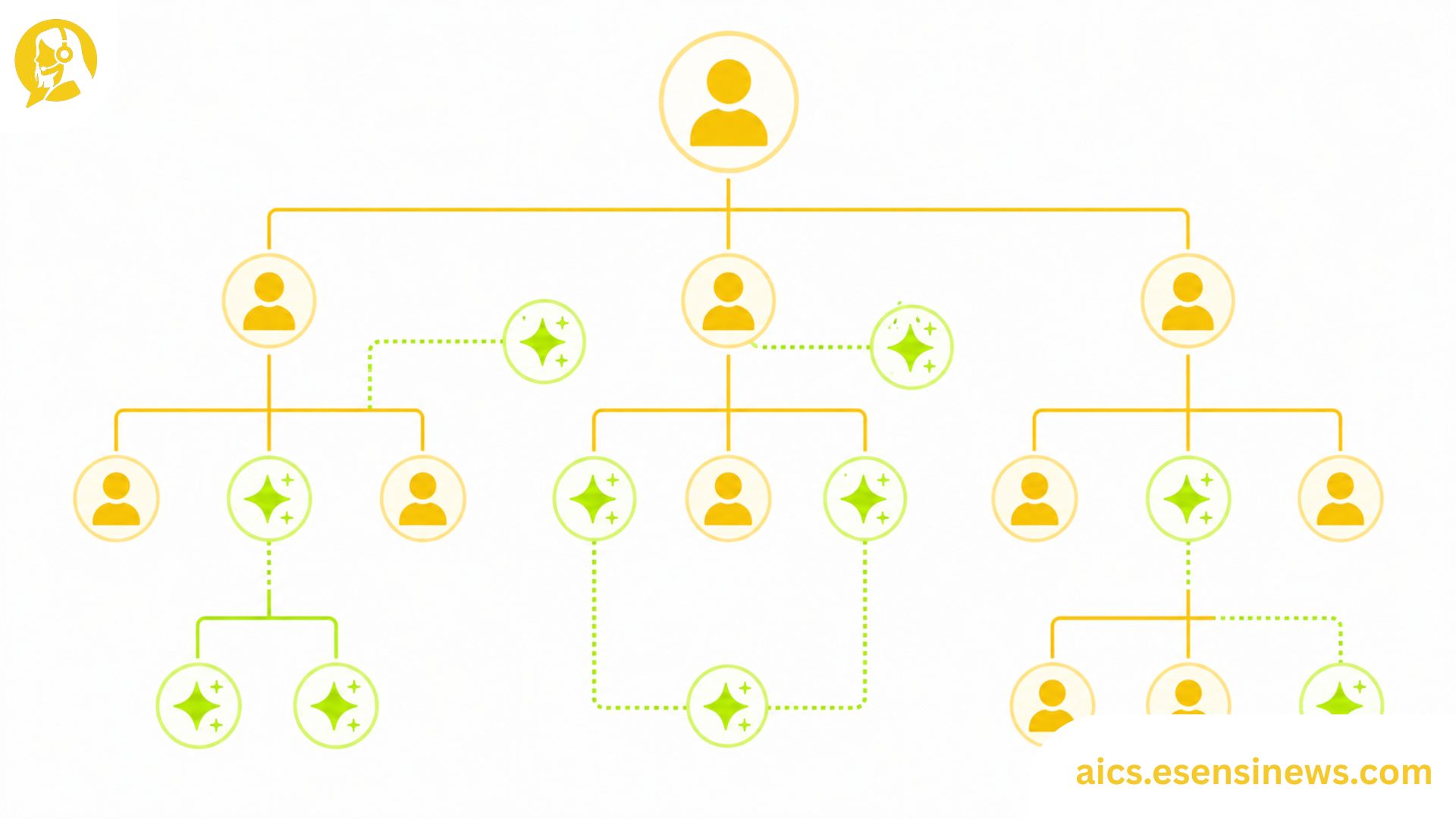
When contact center operations leaders talk about artificial intelligence, the conversation usually lands pretty quickly on tools, features, and metrics. What gets discussed less often, but matters just as much, is how the workforce itself shifts when contact center artificial intelligence becomes part of daily operations. Not just whether jobs are cut or saved, but how roles actually change, what skills become more valuable, and what the org chart looks like in a floor that runs alongside AI rather than without it.
This is a conversation worth having early and deliberately, because contact center artificial intelligence doesn’t just change what tools agents use. It changes what good performance looks like, what skills supervisors need to develop, and what kinds of roles the operation actually needs over time. Teams that plan for this proactively tend to adapt better than those who figure it out reactively after the technology is already live.
This guide walks through the workforce evolution that contact center artificial intelligence typically drives, which roles change and how, which new roles tend to emerge, and what operations leaders can do to manage the transition well.
Why Workforce Planning and Contact Center Artificial Intelligence Have to Go Together
Deploying AI without a workforce plan is like building a new road without updating the traffic signs. The infrastructure might be technically sound, but the people using it will be confused about where to go and what the new rules are.
Contact center artificial intelligence typically hits the workforce in three simultaneous ways. It reduces the volume of certain task types that agents previously handled. It raises the skill floor for the interactions that remain. And it creates entirely new responsibilities that didn’t exist before, like monitoring AI performance, training conversation flows, and handling escalations that AI flags but can’t resolve.
How Contact Center Artificial Intelligence Changes Existing Roles
The Agent Role
The biggest shift for frontline agents is that the work becomes less about volume and more about judgment. Routine, repetitive tasks move to AI, which means the calls and chats that do reach human agents are, on average, more complex, more emotionally charged, and more nuanced than before.
This is both an opportunity and a challenge. Agents who adapt tend to find the work more engaging. Those who struggle with less scripted, more judgment-dependent conversations may need more support and coaching than before.
Key skills that become more important for agents:
- Emotional intelligence and de-escalation
- Critical thinking and problem-solving in ambiguous situations
- Collaboration with AI tools, including knowing when to trust and when to override suggestions
- Adaptability as AI capabilities and workflows evolve
The Supervisor Role
Contact center artificial intelligence changes what supervisors monitor. Instead of spot-checking random calls or managing queue volume manually, supervisors increasingly work with AI-generated insights — reviewing flagged conversations, coaching based on patterns AI surfaces, and making judgment calls about edge cases the AI routes for human attention.
This requires stronger analytical skills than the traditional supervisor role, as well as comfort working with AI dashboards and interpreting performance data in more nuanced ways.
The QA Analyst Role
Quality assurance changes significantly. AI can now review a much higher percentage of conversations than human analysts could manually, which shifts the QA role toward interpreting and acting on AI-generated quality data rather than listening to individual calls. The analyst role becomes less about sample reviews and more about trend identification and program design.
New Roles That Contact Center Artificial Intelligence Creates
In addition to changing existing roles, contact center artificial intelligence tends to create new responsibilities that few contact centers had before.
AI Conversation Designer
Someone needs to design and maintain the conversation flows that AI uses, including fallback responses, escalation triggers, and the tone and language used throughout automated interactions. This role requires a blend of UX thinking, linguistics, and customer service expertise.
AI Performance Analyst
Someone needs to monitor how AI is actually performing, not just overall resolution rates, but patterns in where conversations break down, which intents are frequently misunderstood, and where human escalation rates are higher than expected.
AI Training Coordinator
When agents flag AI errors or unhelpful responses, someone needs to review those flags, confirm the issue, and work with vendors or internal teams to improve the system’s behavior over time.
Change and Adoption Manager
Especially during the early months of a major AI rollout, a dedicated role focused on agent adoption, training, and feedback collection can significantly improve how well the transition goes.
Career Path Implications for Contact Center Teams
One concern agents understandably have about contact center artificial intelligence is what it means for their own career trajectory. The honest answer is that the most in-demand paths inside AI-integrated contact centers shift toward roles that require judgment, design thinking, and analytical skills rather than purely high transaction volume.
For agents willing to develop these capabilities, AI often creates more diverse and engaging career opportunities than traditional contact center structures offered. The risk is for agents who prefer high-volume, low-complexity work, since that category of tasks is exactly where AI tends to have the biggest impact.
Pros and Cons of the Workforce Shift Driven by Contact Center Artificial Intelligence
Pros ✅
- Roles become more engaging as routine work moves to AI
- New career paths open up that didn’t exist before
- Supervisors gain better data for coaching and workforce development
- QA becomes more comprehensive with AI-assisted review at scale
- Agents with strong soft skills tend to become more valuable, not less
Cons ❌
- Reskilling takes real time and investment, which some teams underestimate
- Agents comfortable with high-volume routine work may struggle with the shift
- New roles require capabilities that may not exist in the current workforce
- Short-term performance dips during the transition period are common
- Workforce planning requires more ongoing attention than pre-AI staffing models
Practical Tips for Managing the Workforce Transition
- Start reskilling conversations early, ideally before AI is live on the floor, not after agents are already confused about their changing role.
- Identify your strongest soft-skill performers now — they’re likely your best candidates for elevated roles in an AI-integrated environment.
- Create visible, honest career paths for agents in an AI-supported operation, so uncertainty doesn’t turn into attrition.
- Build feedback loops so frontline agents can flag AI issues in a safe, structured way.
- Update performance frameworks before launch, since measuring agents by the same metrics as before AI tends to create misaligned incentives.
Common Mistakes Operations Leaders Make Around Workforce Planning
- Treating workforce planning as an HR responsibility rather than an operational one that ops leaders need to drive
- Waiting until AI is live to start reskilling and role redefinition conversations
- Communicating only about AI features, without addressing what it means for agents’ day-to-day work
- Keeping the same performance metrics, which misalign incentives in a fundamentally changed environment
- Not creating new roles early enough, leaving AI performance gaps unaddressed because nobody officially owns them
FAQ: Contact Center Artificial Intelligence and Workforce
1. How does contact center artificial intelligence change the agent role? The role shifts toward more complex, emotionally nuanced conversations as AI handles routine tasks, making judgment, empathy, and adaptability more important than transaction volume.
2. What new roles does contact center AI create? Common new roles include AI conversation designer, AI performance analyst, AI training coordinator, and change and adoption manager.
3. Does contact center artificial intelligence eliminate agent jobs? It tends to reduce the volume of routine task roles over time while increasing the value and complexity of roles requiring human judgment and interpersonal skills.
4. How should supervisors change their approach when AI is introduced? Supervisors should shift toward working with AI-generated performance insights, coaching based on patterns rather than individual call samples, and handling escalation judgment calls.
5. What skills become more important for agents in an AI-integrated contact center? Emotional intelligence, critical thinking, problem-solving in ambiguous situations, and comfort collaborating with AI tools are increasingly valuable.
6. How do you manage agent anxiety about contact center AI during rollout? Clear, honest communication about how roles change, visible career path opportunities, and early involvement in the design process all help reduce uncertainty and resistance.
7. When should workforce planning for contact center AI begin? Ideally well before the technology goes live, since reskilling, role redefinition, and performance framework updates all take time to implement effectively.
Conclusion
Contact center artificial intelligence changes the workforce as much as it changes the tech stack, and operations leaders who plan for both tend to have significantly smoother transitions than those who focus only on the tools. Roles evolve, new capabilities become valuable, and new positions emerge that few contact centers had before. Getting ahead of that evolution, rather than reacting to it, is what separates a workforce that adapts and grows alongside AI from one that just tolerates it.
The takeaway? Start workforce planning conversations early, update your performance frameworks before AI goes live, and invest in visible career paths that give your team something to move toward, not just something to adjust around.
Ready to Start Planning Your Workforce Transition?
If this guide gave you a clearer picture of what’s ahead, take a first step by mapping your current roles against how AI is likely to change each one in your operation. Know another ops leader navigating the same workforce questions? Pass this along to them. And if you’re planning to explore more AI operations strategies, bookmark this page so it’s easy to find again. Here’s to building a workforce that grows with AI rather than just getting used to it.


Leave a Reply