
When most people talk about the use of AI in customer service, they’re picturing the support team: chatbots, ticket routing, maybe some agent-assist tools. And that’s definitely a big part of the picture. But it’s not the whole picture. Customer experience doesn’t live in one department, and increasingly, neither does AI.
Marketing, sales, and operations all touch the customer journey at critical moments. When those departments also use AI thoughtfully, the result is a far more seamless, consistent experience for customers, rather than a patchwork of siloed tools that all behave differently. Understanding the use of AI in customer service from this broader, cross-functional lens often reveals opportunities that teams focused only on the support function simply never see.
This guide walks through how AI shows up across four key departments that shape the customer experience, why alignment between them matters, and how CX leaders can start thinking about their AI strategy in a more connected way.
Why the Use of AI in Customer Service Is Bigger Than the Support Team
Most customer journeys touch multiple departments long before and after a support ticket gets opened. A customer might first encounter your brand through a marketing email, get followed up by a sales rep, onboard with help from operations, and only then reach the support team with a question.
If AI is optimized purely within the support function while being ignored or inconsistently used everywhere else, customers will notice the gaps, even if they can’t articulate why the experience feels uneven. This is why thinking about the use of AI in customer service as a cross-departmental challenge, not just a support-team tooling decision, tends to produce better outcomes overall.
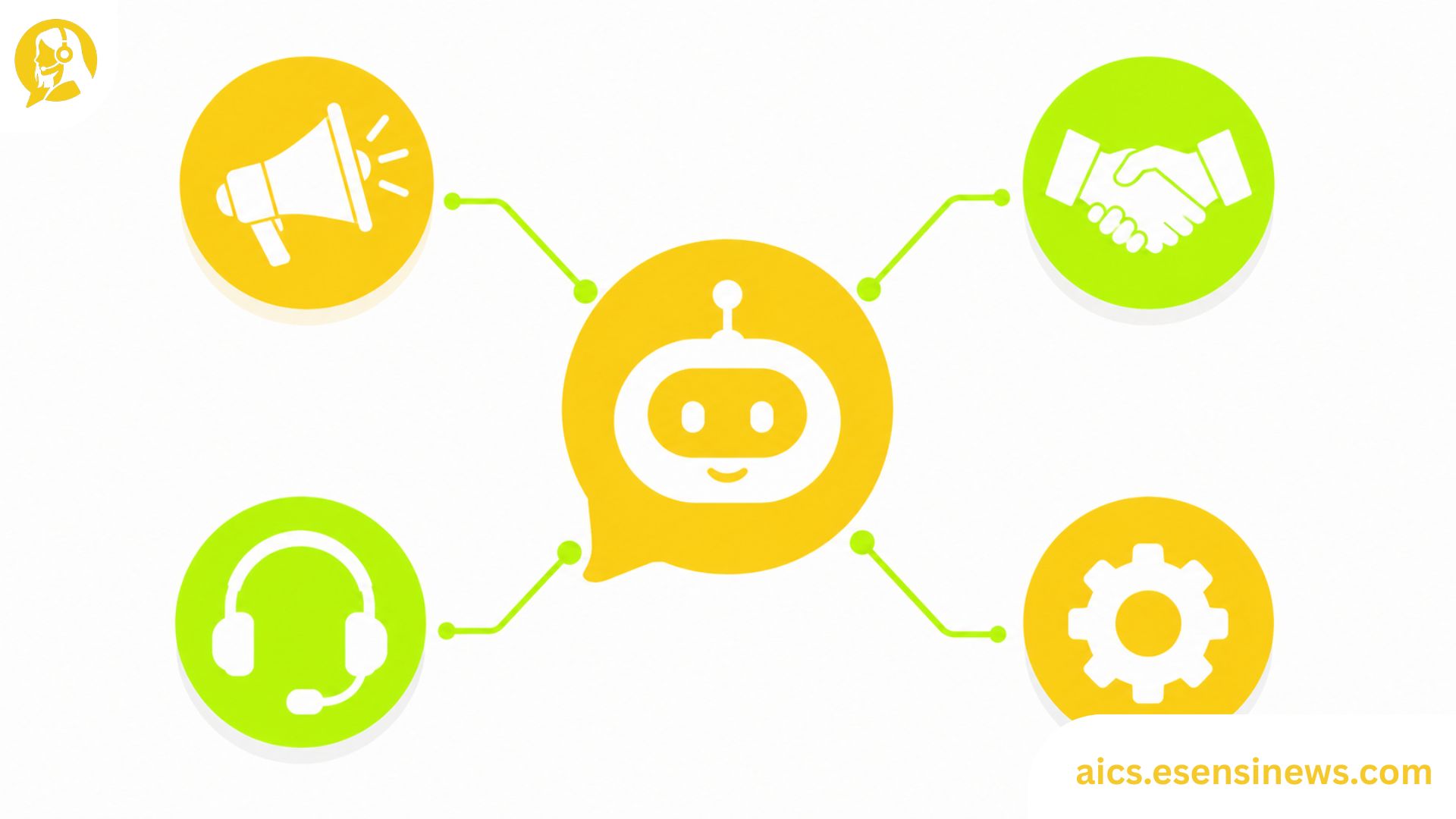
The Use of AI in Customer Service Across 4 Key Departments
1. Customer Support
This is where most AI customer service conversations start, and for good reason. The use of AI in support typically includes:
- Automated responses to common questions
- Smart ticket routing based on intent and urgency
- Real-time agent-assist tools during live conversations
- Post-interaction summaries and quality review
When support AI is working well, it reduces resolution time, lowers agent burnout, and gives managers better visibility into recurring customer issues.
2. Marketing
Marketing shapes customer expectations before anyone ever opens a support ticket. AI tools in marketing that directly affect the customer service experience include:
- Personalization engines that tailor content, offers, and communications based on past behavior
- Predictive tools that identify customers likely to disengage, enabling earlier, more targeted outreach
- Automated lifecycle emails that anticipate needs rather than just reacting to them
When marketing AI is aligned with support AI, the two departments share a more consistent understanding of what customers actually need and when.
3. Sales
The handoff between sales and support is one of the most common sources of friction in the customer journey. AI tools used in sales that affect ongoing customer service include:
- CRM intelligence that surfaces context and history for every customer interaction
- Automated follow-up sequences that help ensure post-sale commitments don’t fall through
- Conversation intelligence tools that analyze sales calls to identify expectations that were set and need to be met downstream
When sales teams use AI that integrates with the support stack, customers don’t have to re-explain what they were promised just because they’ve been handed to a different team.
4. Operations
Operations often works invisibly in the customer experience, but its impact is significant. The use of AI in operations that affects customers directly includes:
- Inventory and fulfillment systems that proactively flag delivery delays before customers call in about them
- Workflow automation that speeds up processes customers are waiting on, like returns, refunds, or account changes
- Capacity planning tools that reduce wait times by better matching staffing to demand
When operations AI surfaces relevant signals to the support team in real time, agents can respond to customer concerns with accurate, up-to-date context rather than vague reassurances.
Why Cross-Departmental AI Alignment Matters
Here’s a simple example of what happens without alignment: a customer receives a marketing email promising a fast resolution process, contacts support expecting that promise to be honored, and encounters a system and team that has no idea what the marketing email said.
That’s not a failure of any one department’s AI. It’s a failure of coordination between them. Cross-departmental alignment around the use of AI in customer service reduces those gaps by:
- Sharing customer data and context across systems
- Setting consistent tone and expectations across every touchpoint
- Surfacing signals from one function that help another respond more intelligently
- Creating a feedback loop where support insights actually inform marketing and sales approaches
Pros and Cons of a Cross-Departmental AI Approach
Pros ✅
- Creates a more consistent customer experience across every touchpoint
- Reduces friction at handoff points between departments
- Surfaces insights that single-function AI deployments often miss entirely
- Improves proactive outreach when operations and marketing signals reach the support team faster
- Makes AI investment more defensible because benefits span multiple functions
Cons ❌
- Requires cross-team coordination, which is often harder to get right than the technology itself
- Data integration between department systems takes real planning and sometimes significant engineering effort
- Different departments may have different AI maturity levels, creating uneven progress
- Accountability can get blurry when AI touches multiple functions simultaneously
- Harder to measure ROI cleanly when benefits are distributed across departments
Practical Tips for Thinking About AI Across Departments
- Map the full customer journey first, identifying every departmental touchpoint before discussing which AI tools belong where.
- Create a shared data layer, or at minimum a clear process for sharing relevant customer context across teams.
- Align on tone and messaging expectations across marketing, sales, and support AI, since inconsistency across channels damages trust fast.
- Establish a cross-functional AI steering group, even informally, so decisions in one department don’t create problems for another.
- Start with the handoff points. The moment a customer moves from marketing to sales, or sales to support, is often where the biggest experience gaps live.
Common Mistakes Teams Make With Cross-Departmental AI
- Letting each department choose AI tools in complete isolation, creating incompatible systems and data silos
- Assuming the support team owns all customer experience AI, when in reality it spans multiple functions
- Failing to share insights across departments, missing the feedback loops that make AI more effective over time
- Over-investing in one department’s AI while leaving obvious gaps in others that affect the same customer journey
- Skipping a shared data strategy, which means departments can’t actually benefit from each other’s AI investment
FAQ: Use of AI in Customer Service
1. Does the use of AI in customer service extend beyond the support team? Yes. Marketing, sales, and operations all use AI in ways that directly shape the customer experience, often before a support ticket is ever opened.
2. Why does cross-departmental AI alignment matter for customer service? Without alignment, customers encounter inconsistent experiences and friction at handoff points between departments, even when each team’s individual AI is working well.
3. How does marketing AI affect customer service? Marketing AI shapes customer expectations and can identify disengaging customers early, enabling proactive outreach that reduces reactive support volume later.
4. What’s the most common gap in cross-departmental AI use? Weak or missing data integration between department systems is one of the most common issues, meaning context doesn’t travel with the customer across touchpoints.
5. How do you start building a cross-departmental AI strategy? Begin by mapping the full customer journey to identify every departmental touchpoint, then focus on the handoff points where experience gaps tend to be most visible.
6. Is cross-departmental AI only realistic for large companies? No. Even smaller teams benefit from aligning AI use across functions, the coordination just tends to be simpler with fewer stakeholders involved.
7. Who should own cross-departmental AI strategy for customer service? A CX leader, head of operations, or a cross-functional steering group with representation from support, marketing, sales, and technology tends to work best.
Conclusion
The use of AI in customer service is bigger than any single team. When marketing, sales, operations, and support all use AI in ways that connect and communicate with each other, customers experience something genuinely different: a journey that feels consistent, intelligent, and actually responsive to their needs at every stage.
The takeaway? Think beyond your own department’s AI stack. Map the full journey, find the gaps at the handoff points, and start building toward a more connected approach. That’s where the real value of AI in customer service tends to live.
Ready to Think Bigger About AI in Your Customer Journey?
If this guide gave you a new way to look at where AI fits across your business, start by mapping one handoff point in your customer journey and exploring what AI could do there. Know a colleague in marketing or sales who’s thinking about the customer experience side of AI too? Share this with them. And if you’re planning to explore more cross-functional CX strategies, bookmark this page so it’s easy to come back to. Here’s to a customer experience that feels seamless from start to finish.


Leave a Reply