
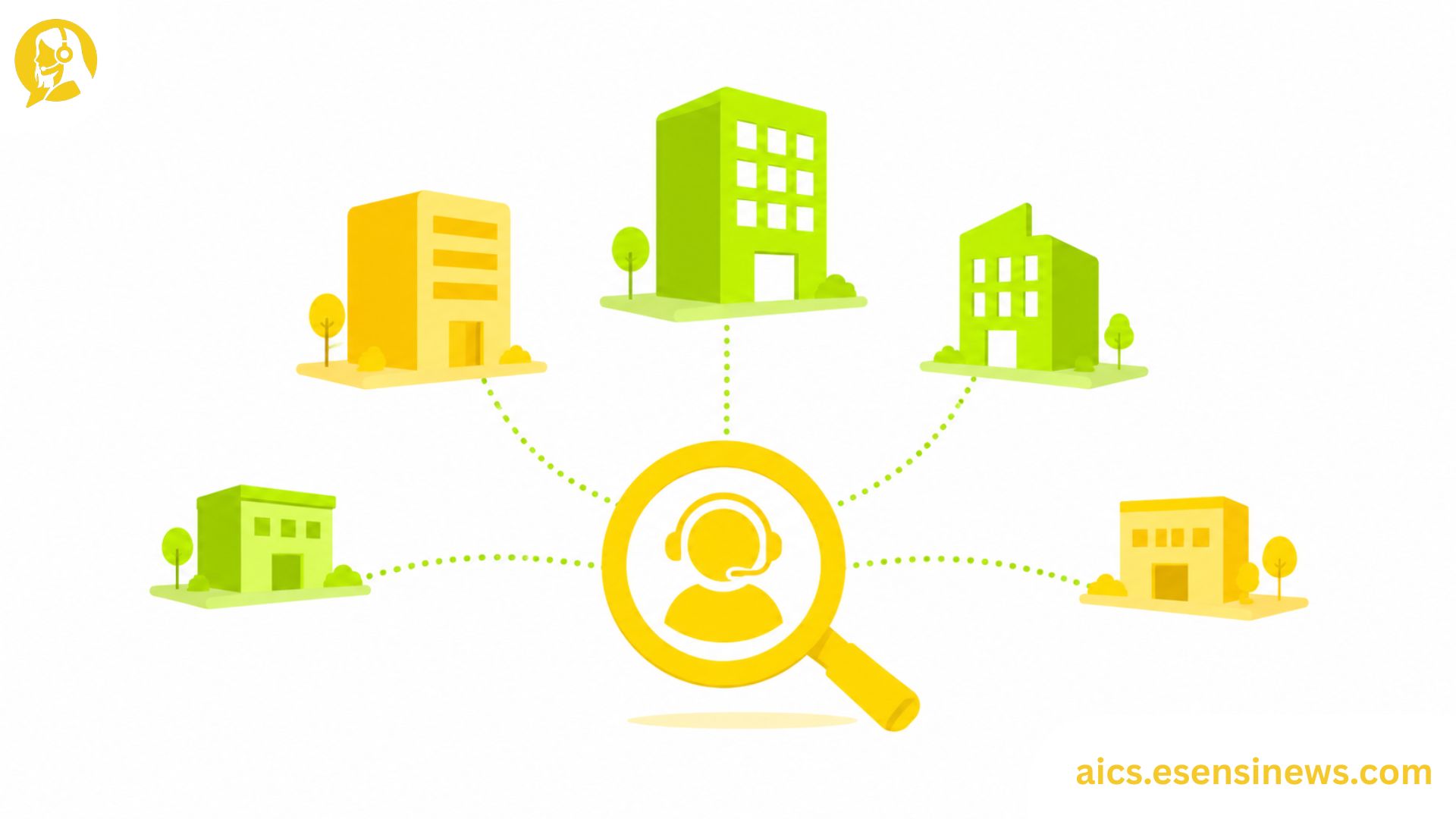
Search “customer service AI companies” and you’ll find hundreds of results, each claiming to offer the smartest, fastest, most seamless AI for support. The market is genuinely crowded right now, with new entrants launching regularly alongside established players who’ve been in the space for years. For a CX manager or IT decision maker trying to build a shortlist, that noise can make the whole evaluation process feel harder than it needs to be.
The key to cutting through it quickly is understanding that not all customer service AI companies are the same type of company. Some are pure-play AI vendors built specifically for this use case. Others are helpdesk platforms or CRM companies that have added AI features on top of existing products. Understanding which type of company you’re evaluating changes almost everything about how you assess them, what questions to ask, and what trade-offs to expect.
This guide walks through the five main types of customer service AI companies operating in the market today, company-level evaluation criteria that go beyond product features, and the red flags worth taking seriously before you commit.
Why Company Type Matters as Much as Product Features
Evaluating a customer service AI company purely on features is a bit like choosing a contractor based only on their portfolio without checking whether they’re financially stable, responsive, and likely to be around in two years. The product matters, but so does the company behind it.
Different types of customer service AI companies carry different trade-offs around depth of specialization, integration flexibility, long-term roadmap, and support quality. Understanding which type you’re dealing with helps you ask the right questions from the start.
5 Types of Customer Service AI Companies
1. Pure-Play AI Customer Service Vendors
These companies were built specifically to solve AI-powered customer service, not as an add-on to something else. Their entire roadmap centers on this problem, which often means deeper specialization, faster feature development in this specific space, and stronger expertise in the nuances of customer service AI.
Trade-off: Narrower scope means you may need additional tools for broader CX functions, and integration complexity can be higher.
2. Helpdesk Platforms With AI Layers
These are established helpdesk or ticketing platforms that have added AI features on top of their existing product. The advantage is that AI is built into a tool your team may already use, reducing the integration burden significantly.
Trade-off: AI capabilities are often secondary to the core helpdesk product, which can mean slower AI-specific feature development and shallower specialization than pure-play vendors.
3. CRM Platforms With AI Customer Service Features
CRM providers have increasingly built customer service AI into their platforms, leveraging the deep customer data they already hold. When AI and customer data live in the same system, personalization and context continuity can be stronger.
Trade-off: CRM-native AI tends to work best within the CRM ecosystem, which can limit flexibility if your support stack spans multiple platforms.
4. Contact Center as a Service (CCaaS) Providers
These companies offer cloud-based contact center infrastructure with AI built in, covering voice, chat, and digital channels in a single platform. For teams running high-volume call center operations, this category often provides the tightest integration between AI and telephony.
Trade-off: These platforms can be more complex and expensive than point solutions, and AI capabilities may vary significantly between providers in this category.
5. Niche or Vertical-Specific AI Vendors
Some customer service AI companies specialize in specific industries, like healthcare, financial services, or e-commerce, with AI trained specifically on the terminology, compliance requirements, and interaction patterns of that vertical.
Trade-off: Deep vertical specialization often comes with less flexibility for companies that operate across multiple industries or have unusual workflows.
Company-Level Evaluation Criteria That Go Beyond Product Features
Once you’ve identified which type of company you’re evaluating, here are the company-level criteria worth assessing before you ever book a demo.
1. Financial Stability and Funding History
A well-funded company with a clear growth trajectory is a safer long-term partner than one running on limited runway. Look for publicly available information about funding rounds, revenue growth signals, and ownership structure.
2. Roadmap Transparency
Ask directly what’s on the product roadmap and when. Companies confident in their direction tend to be more open about this than those still figuring it out. A vague “we’re always improving” answer isn’t reassuring.
3. Customer Retention and Reference Quality
Ask for references specifically from companies of similar size and use case, not just the most impressive logos on their website. High customer turnover is a signal worth taking seriously.
4. Support Quality and Responsiveness
The quality of support you receive during evaluation often predicts the support you’ll get post-contract. Slow or evasive responses to pre-sales questions are a genuine red flag.
5. Data Handling and Security Posture
Ask about data residency, security certifications, and how customer data is used for model training. Reputable companies answer this readily and clearly.
Red Flags to Watch for When Evaluating Customer Service AI Companies
- Reluctance to provide real reference customers for your use case or industry
- Vague or evasive answers to data security questions
- Demo environments that don’t reflect real-world performance under messy, unpredictable customer language
- Lock-in terms that make data export difficult if you decide to switch
- Overpromising ROI timelines without acknowledging implementation or tuning periods
- No clear escalation path when their AI doesn’t handle something well
How to Build a Smarter Shortlist
Rather than starting with a long list and trying to narrow it down purely through demos, consider this approach:
- Identify your company type requirement first. Do you need a pure-play specialist, or does integration with existing tools matter more than depth?
- Set non-negotiable criteria at the company level, like data residency, minimum funding indicators, or reference customer availability.
- Apply these criteria to eliminate vendors before demos, so your demo time focuses only on companies that have already cleared the basics.
- Run demos with realistic scenarios, not the polished examples vendors prefer to showcase.
- Talk to existing customers directly, not just the names vendors offer as references.
Pros and Cons of Navigating Customer Service AI Companies by Type
Pros ✅
- Clarifies trade-offs upfront, before time is spent on mismatched vendor evaluations
- Helps set realistic expectations for integration complexity and depth
- Improves shortlisting efficiency, since company type eliminates obvious mismatches quickly
- Raises better questions during demos and reference calls
- Reduces post-implementation surprises by surfacing company-level risks early
Cons ❌
- Company categories blur as vendors expand capabilities and blur into each other
- Requires more upfront research than simply running a generic RFP
- Strong product from unstable company is hard to evaluate without full financial transparency
- Vertical specialists may underperform if your use case spans multiple industries
- Landscape shifts quickly, so today’s category leaders may look different in twelve months
FAQ: Customer Service AI Companies
1. What types of companies provide customer service AI? The main categories include pure-play AI vendors, helpdesk platforms with AI layers, CRM providers with AI features, CCaaS providers, and niche vertical specialists.
2. How do I evaluate a customer service AI company beyond its product features? Assess financial stability, roadmap transparency, reference quality, support responsiveness, and data security practices at the company level before focusing on product demos.
3. What red flags should I watch for when evaluating customer service AI companies? Reluctance to share real customer references, vague data security answers, demo environments that don’t reflect real-world conditions, and difficult data export terms are all worth taking seriously.
4. Is it better to choose a pure-play AI vendor or a platform with built-in AI? Neither is universally better. Pure-play vendors offer deeper specialization, while platforms with built-in AI offer easier integration into existing tools. The right fit depends on your specific stack and priorities.
5. How important is a vendor’s financial stability when choosing a customer service AI company? Very important. A strong product from an unstable company creates significant risk if support quality drops or the company is acquired or shuts down.
6. Should I always choose the largest, most well-known customer service AI companies? Not necessarily. Smaller, specialized vendors can outperform larger ones in specific use cases, particularly in regulated industries or niche verticals.
7. How often should I reassess my customer service AI vendor relationship? An annual review, or at contract renewal, is a reasonable minimum — the landscape evolves quickly enough that assumptions from eighteen months ago may no longer hold.
Conclusion
Navigating customer service AI companies is genuinely easier when you start with company type rather than feature lists. Understanding whether you’re evaluating a pure-play specialist, a CRM platform, or a CCaaS provider shapes the questions you ask, the trade-offs you expect, and the red flags you watch for. Company-level evaluation, not just product-level evaluation, is what separates a solid long-term vendor relationship from a frustrating one.
The takeaway? Build your shortlist by company type and non-negotiable company criteria first, then use demos to compare the shortlist, not to create it. That’s how you end up with a vendor that’s both the right product and the right partner.
Ready to Start Shortlisting Smarter?
If this guide gave you a clearer framework, try categorizing the vendors you’re already considering by company type and running them against the company-level criteria above before your next demo. Know another CX or IT leader navigating the same evaluation? Pass this along to them. And if you’re planning to dig deeper into AI vendor selection strategies, bookmark this page so it’s easy to find again. Here’s to finding a partner that holds up well past the sales pitch.


Leave a Reply