
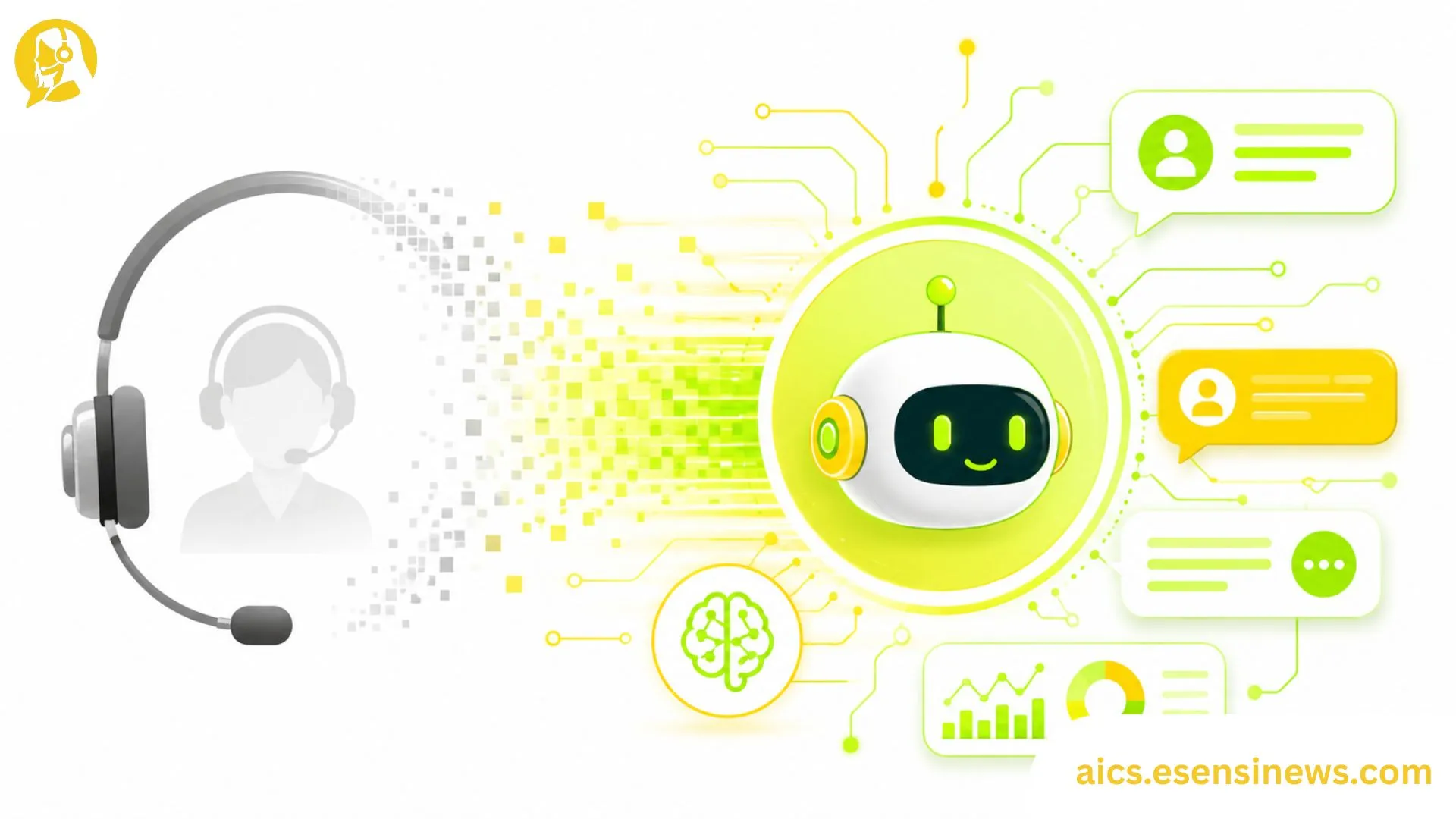
Bad customer support doesn’t just cost you the ticket it costs you the customer. Studies on churn consistently show that a poor support experience is one of the top two or three reasons customers leave, regardless of how much they liked the product. That’s why call center AI solutions have moved from “interesting experiment” to a line item in operations budgets that executives actually defend in quarterly reviews and why more procurement teams are issuing formal RFPs for call center AI solutions than ever before.
The pitch from vendors is easy to understand: AI handles the repetitive stuff, humans handle the hard stuff, and the whole operation runs cheaper and faster. What’s less obvious is how to evaluate which call center AI solutions are worth the investment, what realistic deployment looks like, and where the gaps are that no vendor will volunteer upfront. That’s what this guide is for.
I’ve been tracking this market long enough to have watched both the hype cycles and the genuine results. The good news: the results are getting a lot more real.
Last updated: June 2026.
The Importance of Efficient Customer Support
Support efficiency isn’t just an operational metric it’s a revenue variable. A 2025 Bain & Company customer loyalty report estimated that companies which consistently resolve customer issues on the first contact retain customers at a rate roughly 30% higher than those with average first-contact resolution. Compounded across a year of interactions, that retention gap translates directly to revenue.
The challenge is that “efficient” in a traditional call center context meant “faster handle time per call,” which often pushed agents to rush through complex issues and surface them right back into the queue as follow-up contacts. Call center AI solutions attack a different problem: reducing the number of contacts that require a senior human agent in the first place, so when a person does pick up, they have the time and context to actually resolve it.
It’s a bit like the difference between trying to drive faster through traffic versus removing the cars that shouldn’t be on the highway at all. Both approaches touch speed, but only one of them changes the underlying congestion.
How AI Is Changing the Way Call Centers Operate
The shift AI brings to call center operations isn’t subtle once you see it on a dashboard. Contact volume doesn’t shrink it actually tends to grow as businesses scale but the proportion requiring human agent involvement starts to drop significantly after a well-tuned AI layer is in place.
Three changes show up consistently across deployments:
The nature of the human agent role shifts. With routine tier-1 contacts handled by AI, agents spend more of their shift on complex or emotionally sensitive calls which requires more skill but also tends to create more job satisfaction than answering the same billing question 40 times a day.
QA goes from reactive to real-time. Traditional quality assurance caught problems after the fact through sampled call reviews. AI-powered QA flags compliance issues and tone problems mid-call or immediately post-call, shrinking the feedback loop from weeks to hours.
Data quality improves across the board. Every interaction generates structured, tagged data intent, sentiment, resolution path, escalation reason instead of vague call-reason codes entered manually by agents who are already on to the next call.
A 2025 Harvard Business Review analysis of contact center transformation case studies found that organizations using AI for both automation and agent-assist simultaneously saw roughly 40% better outcomes on customer satisfaction metrics than those using only one of the two approaches. The combination matters more than either piece alone.
Key AI Technologies Used in Call Centers
Understanding the technology stack helps you evaluate vendor claims more accurately. “Powered by AI” on a pricing page covers a wide spectrum from genuinely sophisticated to marketing gloss on an older system.
| Technology | What It Actually Does | Realistic Accuracy Range | Cost Range (Enterprise) |
|---|---|---|---|
| NLU / Intent Recognition | Understands what the caller wants from natural speech | 85-95% on trained domains | Bundled in most platforms |
| Voice AI / Conversational Agent | Handles full calls autonomously without a human | 60-80% first-call resolution on routine queries | $400–$3,500/month base |
| Agent-Assist Copilot | Provides live response suggestions to human agents | Reduces handle time 15-28% in documented deployments | $35–$110 per seat/month |
| Automated QA Scoring | Reviews 100% of calls for compliance and quality | Flags 90%+ of true compliance misses | $200–$1,500/month |
| Predictive Routing | Matches callers to optimal agents using real-time signals | Improves first-contact resolution 10-20% | Custom enterprise pricing |
One thing worth noting: accuracy percentages in the table above reflect documented third-party benchmarks for well-implemented systems, not vendor marketing claims. Systems that aren’t actively maintained or retrained on new data typically drift below these ranges within 6-12 months.
Benefits of Implementing Call Center AI Solutions
The benefits are real, but they’re not evenly distributed across every deployment. Here’s an honest split:
✅ Consistent wins across industries
- Tier-1 contact deflection order status, password resets, FAQs reaching 60-75% within the first quarter of a focused deployment
- Cost per contact reductions of 20-40% at 12-month maturity, per Forrester’s 2025 contact center benchmarking data
- Elimination of after-hours coverage gaps without night shift staffing costs
- Reduction in manual QA workload while actually increasing review coverage to 100%
❌ Where results are less predictable
- Businesses with primarily complex, relationship-driven contacts (high-touch B2B, professional services) see smaller automation gains the low-complexity contacts simply aren’t there to deflect
- Industries with significant regulatory overlap (healthcare, financial services) face longer implementation timelines due to compliance review requirements
- Companies with legacy telephony systems often spend as much on integration as on the AI platform itself in year one
- Small teams (under 10 agents) may not generate enough call volume to justify enterprise platform costs
Real talk: the ROI case is strongest when you have at least 30-40% repetitive contact volume, a modern cloud-based telephony stack, and the internal bandwidth to manage a multi-month implementation properly.
Top Call Center AI Solutions: Vendor Category Breakdown
Rather than ranking specific products (which change pricing and features faster than any article can stay current), here’s how the major vendor categories compare what each is built for, who it fits, and what it typically costs.
Cloud CCaaS Platforms with Native AI
Platforms like Genesys Cloud CX, NICE CXone, Talkdesk, and Five9 offer AI features voice bots, agent assist, QA scoring built into an all-in-one contact center suite. The advantage: everything integrates natively. The tradeoff: you’re paying for a full platform even if you only need specific AI features. Best for mid-market to enterprise teams replacing their entire contact center stack.
Typical cost: $90–$200 per agent seat/month for mid-tier plans, scaling up for enterprise features.
Standalone Voice AI Vendors
Companies like Cognigy, Kore.ai, and similar platforms build AI conversation layers that sit on top of existing telephony systems via API. More flexible if you want to keep your current phone system but add intelligent automation on top. Integration complexity is higher, but you pay for what you use.
Typical cost: $500–$4,000/month base, plus per-minute or per-conversation usage fees.
Agent-Assist Copilot Specialists
Platforms focused specifically on supporting live human agents in real time surfacing knowledge base articles, suggesting responses, handling post-call documentation automatically. Lower risk to customer experience since a human is still driving the conversation. Often the smartest entry point for businesses worried about full automation.
Typical cost: $40–$110 per agent seat/month.
For ongoing comparison updates as vendors release new features, the AI contact center resource hub tracks the market regularly.
Successful AI Implementations in Call Centers
Three deployments from different industries, paraphrased from publicly reported outcomes:
A national automotive dealership network deployed call center AI solutions to handle service appointment scheduling and basic vehicle status inquiries across its locations contacts that accounted for nearly half its total inbound call volume. Within the first year, roughly 70% of appointment-related calls resolved without human agent involvement, and the freed-up capacity allowed service advisors to focus on upsell conversations during customer drop-offs rather than fielding status calls between appointments.
An online travel agency handling multi-currency bookings across multiple time zones used AI to cover after-hours itinerary changes and basic refund eligibility checks, which had previously required either overnight queues or expensive 24/7 staffing. Post-deployment, after-hours customer satisfaction scores reportedly matched or exceeded daytime scores for the first time in the company’s history because customers were getting actual answers instead of voicemail callbacks.
A subscription software company with high trial-to-paid conversion pressure deployed an agent-assist copilot specifically for its sales-support hybrid team agents handling both technical questions from existing customers and upgrade conversations with trial users. The copilot surfaced relevant feature documentation during technical questions and suggested talking points for upgrade conversations based on the customer’s usage history. Conversion rates on agent-assisted upgrade conversations improved noticeably, and average handle time on technical queries dropped by around 20%.
Pattern across all three: specific, well-scoped problem → faster ROI, cleaner measurement, higher team buy-in.
Challenges and Considerations in AI Adoption
The challenges aren’t reasons not to move forward they’re things to plan for, not discover mid-deployment.
Integration with existing systems is almost always the biggest variable. Cloud-to-cloud integrations between modern platforms are manageable. Connecting AI to a legacy PBX, a heavily customized CRM, or a proprietary ticketing system can add months and five-figure costs that weren’t in the original budget. Get a technical assessment in writing before signing any contract.
Model accuracy degrades without active maintenance. A call center AI solution trained on last year’s product catalog gives confident but outdated answers this year. Someone on your team needs to own ongoing knowledge base updates and model retraining and that person’s time needs to be budgeted, not assumed.
Agent change management is genuinely make-or-break. Teams that understand the AI is handling the frustrating, repetitive calls so they can focus on more meaningful work tend to adopt it well. Teams that feel blindsided or threatened quietly undermine it. Leadership communication before, during, and after launch matters more than most deployment plans account for.
“The technical implementation was the easy part. Getting our agents to trust the copilot took three months of consistent communication and a few visible wins where it saved someone’s day. After that, adoption was organic,” reflected a contact center director at a mid-sized utility company in a 2025 Contact Center Pipeline industry feature.
Future Trends in AI for Customer Support
Agentic AI completing end-to-end transactions. The next generation of call center AI solutions goes beyond conversation to action processing a return, updating billing information, sending a replacement unit without any human in the transaction loop. This capability is already live in limited enterprise deployments and will reach mainstream availability within the next 18-24 months.
Emotion-adaptive AI responses. Systems that don’t just detect a caller’s frustration but actively change their communication style in response to it slowing pacing, simplifying language, moving faster to escalation are closing the gap between technically correct and genuinely helpful.
Fine-tuned vertical models. General large language models are increasingly being replaced by smaller, domain-specific models trained on a company’s own call transcripts and documentation. These run at lower inference cost, maintain higher accuracy on narrow tasks, and are far easier to keep current when products or policies change. For businesses comparing call center AI solutions on long-term TCO, this shift is worth asking vendors about directly.
Regulatory disclosure requirements expanding. Multiple U.S. states are advancing legislation requiring businesses to disclose AI voice agent use upfront during calls. If your roadmap includes fully autonomous voice AI, get legal involved before go-live not after the first regulatory question arrives.
Choosing the Right Call Center AI Solution
Here’s the practical decision framework before you start filling out demo request forms.
Start with your own data, not vendor demos. Pull 90 days of call logs and classify your contact types: What percentage are straightforward and repeatable? What percentage require judgment, relationship context, or complex troubleshooting? The ratio tells you whether full automation, agent-assist, or a phased hybrid is the right starting point.
Then pressure-test vendors on these four questions during every evaluation:
- How does the AI handle escalation what exactly does the human agent receive at handoff?
- Is model retraining included in the contract, or billed separately?
- What are the data export terms if you decide to switch platforms?
- What does your integration timeline look like with our specific CRM and telephony stack?
Vague, deflecting answers on any of those four are a signal to dig harder before signing.
Budget reference: agent-assist tools for a 20-agent team typically run $1,000–$2,500/month. Full voice AI automation platforms for mid-market scale land in the $2,000–$8,000/month range. Enterprise-grade deployments with custom integrations are negotiated individually.
Frequently Asked Questions
What are call center AI solutions and how do they work? Call center AI solutions are software platforms that use machine learning, natural language processing, and speech recognition to handle customer contacts autonomously, assist live human agents in real time, or both. They integrate with existing telephony and CRM systems to route calls, generate responses, and document interactions automatically.
How long does it take to see ROI from call center AI solutions? Most businesses with focused, well-scoped deployments see measurable cost-per-contact reductions within two to three quarters. Enterprise deployments with complex integration requirements typically take 9-12 months to reach clear positive ROI, though handle-time and QA efficiency gains often appear sooner.
Do call center AI solutions work for small businesses? Yes, but the economics work best above a certain volume threshold. Businesses with fewer than 10 agents or very low call volume may find cloud-based starter plans ($300–$800/month) cost-effective if a large share of their contacts are repetitive. The ROI case strengthens significantly as call volume and agent headcount grow.
What’s the biggest risk when implementing call center AI solutions? Scope creep during deployment trying to automate too many contact types simultaneously before the simpler use cases are validated. This almost always leads to accuracy problems, agent frustration, and a rollback that sets the program back by months. Starting narrow and expanding from success is consistently the faster path to full deployment.
Can call center AI solutions integrate with existing CRM and telephony systems? Most enterprise platforms offer native integrations with major CRMs (Salesforce, HubSpot, Zendesk) and cloud telephony systems (Amazon Connect, Twilio, RingCentral). Legacy or heavily customized systems require additional integration engineering typically adding 4-12 weeks and $10,000–$30,000 in project costs depending on complexity.
Embracing AI for Enhanced Customer Experience
Call center AI solutions have cleared the proof-of-concept phase. The businesses using them well in 2026 have lower cost per contact, faster resolution times, and support teams that are less burned out than they were two years ago because the repetitive, draining calls are going somewhere else. The data across industries backs this up consistently.
What separates the success stories from the disappointments isn’t the platform they chose. It’s how honestly they assessed their own contact volume before buying, how carefully they scoped the initial deployment, and how seriously they treated agent communication and change management. Get those three things right, and the technology delivers.
If you’re researching platforms and want to compare current options before committing to a demo calendar, start at aics.esensinews.com for deployment breakdowns and platform comparisons that cut through the marketing language.


Leave a Reply