
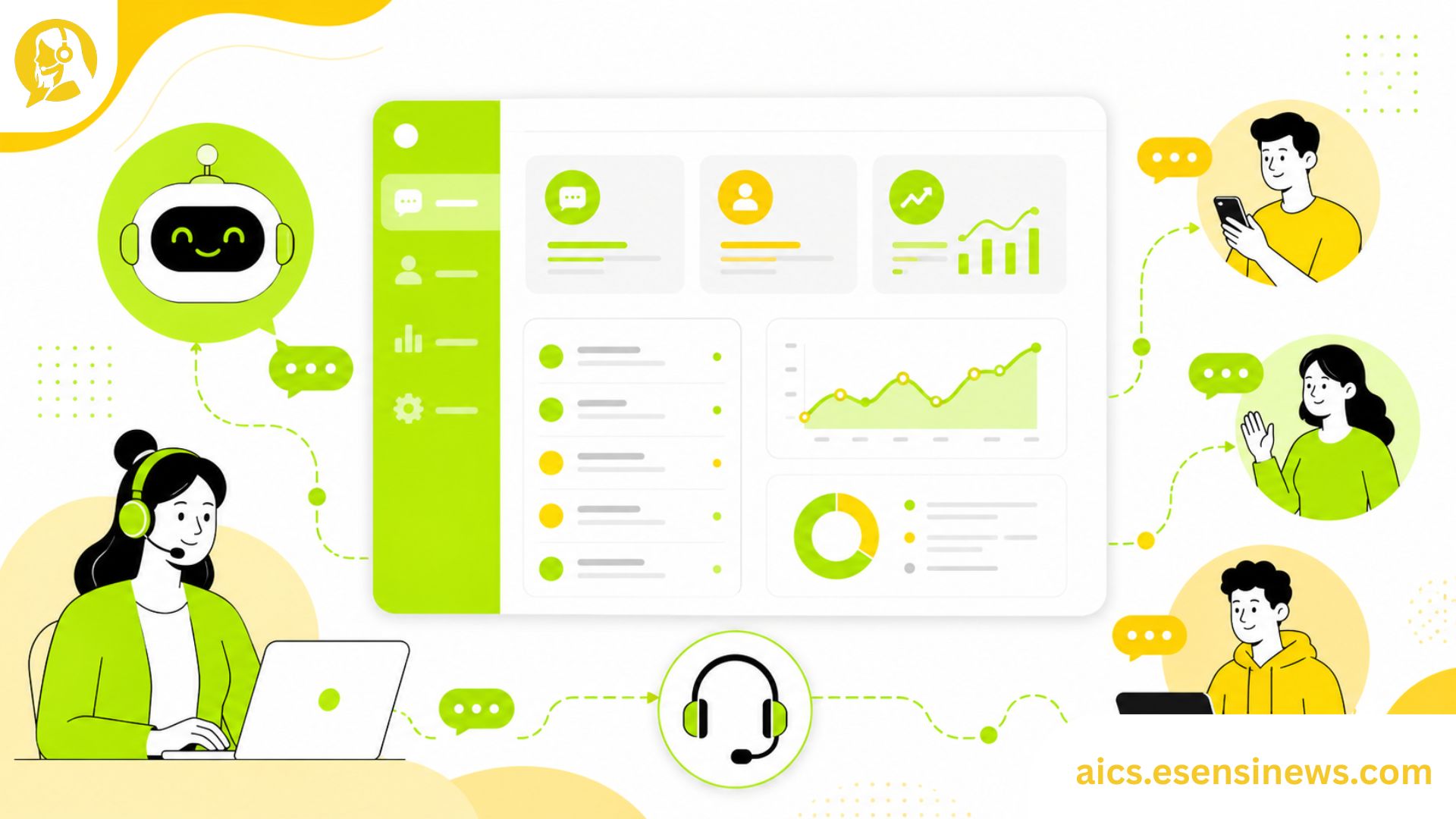
So you’ve been asked to find an AI customer service platform for your contact center. Maybe your support team is drowning in tickets. Maybe leadership wants “AI” in the roadmap. Or maybe your current setup just can’t keep up with customer expectations anymore. Whatever the reason, you’re not alone this is one of the fastest-growing categories in enterprise software right now, and honestly, the market is a little overwhelming.
Here’s the thing: every vendor claims to be “AI-powered.” Every demo looks impressive. But when you’re the IT manager or decision maker who actually has to implement, integrate, and maintain this thing, the flashy chatbot demo doesn’t tell you what you need to know. You need to know about uptime, data security, integration effort, and whether this platform will actually reduce ticket volume or just create a new layer of complexity.
This guide breaks it all down in plain language. No fluff, no buzzword soup just what an AI customer service platform actually does, what to look for, common mistakes teams make when choosing one, and how to evaluate vendors without wasting three months on a proof-of-concept that goes nowhere.
What Is an AI Customer Service Platform, Really?
At its core, an AI customer service platform is software that uses machine learning and natural language processing to handle, route, or assist with customer support interactions. Think of it as a layer that sits between your customers and your human agents, doing the repetitive work so your team can focus on the harder stuff.
It’s not just a chatbot bolted onto your website. A modern platform typically combines several capabilities:
- Conversational AI for chat and voice interactions
- Ticket triage and routing based on intent and urgency
- Agent assist tools that suggest responses in real time
- Knowledge base automation that pulls answers from your existing docs
- Analytics and sentiment tracking across every conversation
Think of it like a really well-trained intern who never sleeps, reads every past conversation instantly, and hands off to a human the moment things get complicated. That’s the ideal, anyway not every platform pulls it off equally well.
Search Intent Behind This Keyword
People searching for “AI customer service platform” are usually in one of three mindsets:
- Informational – trying to understand what these tools even do
- Commercial – comparing vendors before a purchase decision
- Transactional – ready to book a demo or start a trial
This article covers all three, because most IT buyers move through all of them in the same research session anyway.
Why Contact Centers Are Moving to AI Right Now
Customer expectations have shifted fast. People want answers in seconds, not hours, and they expect support to be available around the clock. At the same time, contact centers are under pressure to cut costs without sacrificing quality. AI sits right at that intersection.
A few forces are driving adoption:
- Ticket volume keeps growing faster than headcount budgets
- Customers expect omnichannel support chat, email, voice, social, all connected
- Agent burnout is a real retention problem, and repetitive tickets make it worse
- Data from every interaction is now valuable for product and CX decisions, not just support
If your organization is feeling any of these pressures, that’s usually the trigger point for evaluating an AI customer service platform in the first place.
Core Features to Look For
Not all platforms are built the same. Here’s what actually separates a solid platform from a shiny demo that falls apart in production.
1. Natural Language Understanding That Actually Works
This sounds obvious, but it’s where most platforms disappoint. A good system should understand intent, not just keywords. Test it with messy, real-world phrasing typos, slang, mixed topics in one message before you commit.
2. Seamless Human Handoff
The best AI doesn’t try to replace your agents; it makes them faster. Look for platforms that transfer context smoothly when a bot escalates to a human, so customers never have to repeat themselves. That single feature alone can make or break customer satisfaction scores.
3. Integration With Your Existing Stack
Your AI platform needs to talk to your CRM, helpdesk, and internal knowledge base. Before you sign anything, confirm it has native integrations (or a solid API) for tools like Salesforce, Zendesk, HubSpot, or whatever you’re already running. A platform that requires a six-month custom integration project isn’t saving you time it’s costing you time.
4. Multichannel Support
Customers don’t stick to one channel. A platform that only handles web chat but ignores email, voice, and messaging apps is going to leave gaps. Look for true omnichannel support, where conversation history follows the customer across channels.
5. Analytics and Reporting
You need visibility into what’s working. Good platforms give you dashboards on resolution time, deflection rate, customer satisfaction, and where bots are struggling. Without this, you’re flying blind on ROI.
6. Security and Compliance
This one matters a lot for IT teams specifically. Ask vendors directly about:
- Data encryption (in transit and at rest)
- SOC 2 Type II or ISO 27001 certification
- GDPR and CCPA compliance
- Data residency options if you operate internationally
If a vendor can’t answer these clearly, that’s a red flag, not a minor detail.
7. Scalability
Your ticket volume today isn’t your ticket volume in two years. Choose a platform that scales pricing and performance without forcing a re-platform down the road.
Pros and Cons of AI Customer Service Platforms
It’s easy to get sold on the upside without hearing the tradeoffs. Here’s a balanced look.
Pros:
- Faster response times, often instant for common questions
- Lower cost per ticket over time
- 24/7 availability without extra staffing
- Consistent answers across every interaction
- Agents get freed up for complex, high-value cases
Cons:
- Upfront setup and training takes real effort, not just a flip of a switch
- Poorly trained bots frustrate customers and hurt trust
- Ongoing maintenance is needed as products and policies change
- Integration complexity can be underestimated during sales demos
- Over-automating simple interactions can feel impersonal if not designed carefully
Being upfront about both sides helps you set realistic expectations internally and avoid the classic “AI didn’t deliver” disappointment six months in.
Common Mistakes IT Teams Make When Choosing a Platform
After watching a lot of rollouts succeed and a lot of them stall, a few patterns show up again and again:
- Skipping the messy-data test. Teams demo the platform with clean, scripted questions and never see how it handles real customer chaos.
- Ignoring change management. Agents who feel replaced, not supported, will quietly resist adoption.
- Underestimating integration work. “It has an API” isn’t the same as “it integrates in a day.”
- No clear success metrics. Without defined KPIs deflection rate, CSAT, average handle time you can’t prove ROI later.
- Choosing based on brand name alone. The biggest vendor isn’t always the best fit for your specific ticket volume and use case.
Avoiding these five mistakes alone puts you ahead of most organizations rolling out AI support tools this year.
Practical Tips for Evaluating Vendors
- Run a real pilot, not just a sales demo, with actual historical tickets from your queue
- Involve your frontline agents early they’ll spot usability issues you won’t catch
- Ask for reference customers in your industry and company size, not just logos on a slide
- Negotiate a trial period tied to measurable outcomes, like ticket deflection percentage
- Check the roadmap, not just current features you’re choosing a long-term partner, not a one-time purchase
FAQ
What is an AI customer service platform used for? It’s used to automate and support customer interactions across chat, email, and voice handling routine questions, routing tickets, and assisting human agents with real-time suggestions.
Is an AI customer service platform expensive to implement? Costs vary widely by vendor and scale, but most platforms use tiered or usage-based pricing. Implementation cost depends heavily on how much integration work your existing stack requires.
Can AI customer service platforms replace human agents completely? No, not for most businesses. The goal is usually augmentation automating repetitive tickets while routing complex or sensitive issues to human agents.
How long does it take to implement an AI customer service platform? A basic rollout can take a few weeks, but full integration with your CRM, helpdesk, and knowledge base often takes one to three months depending on complexity.
What’s the difference between a chatbot and a full AI customer service platform? A chatbot is usually just one feature. A full platform combines conversational AI with ticket routing, agent assist tools, analytics, and integrations across your entire support stack.
Is customer data safe with an AI customer service platform? It depends on the vendor. Always confirm encryption standards, compliance certifications (SOC 2, ISO 27001), and data residency options before committing.
Conclusion
Choosing the right AI customer service platform isn’t about picking the flashiest demo it’s about finding a system that fits your actual ticket volume, integrates with what you already run, and treats security as a first-class requirement, not an afterthought. The platforms that succeed long-term are the ones that make agents faster, not the ones that try to remove them entirely.
If you keep the checklist from this guide in mind natural language understanding, smooth handoffs, real integrations, multichannel coverage, solid analytics, tight security, and room to scale you’ll be in a much stronger position than most teams evaluating this space right now.
Ready to dig deeper? Bookmark this page so you’ve got the checklist handy when vendor calls start piling up. If this helped clear things up, send it to a colleague who’s stuck comparing spreadsheets of vendor features it’ll save them a few hours. And if you’re already deep into evaluations, check out our other guides on contact center automation to keep building out your shortlist. No pressure to buy anything here just want you walking into those vendor demos with the right questions ready.


Leave a Reply