
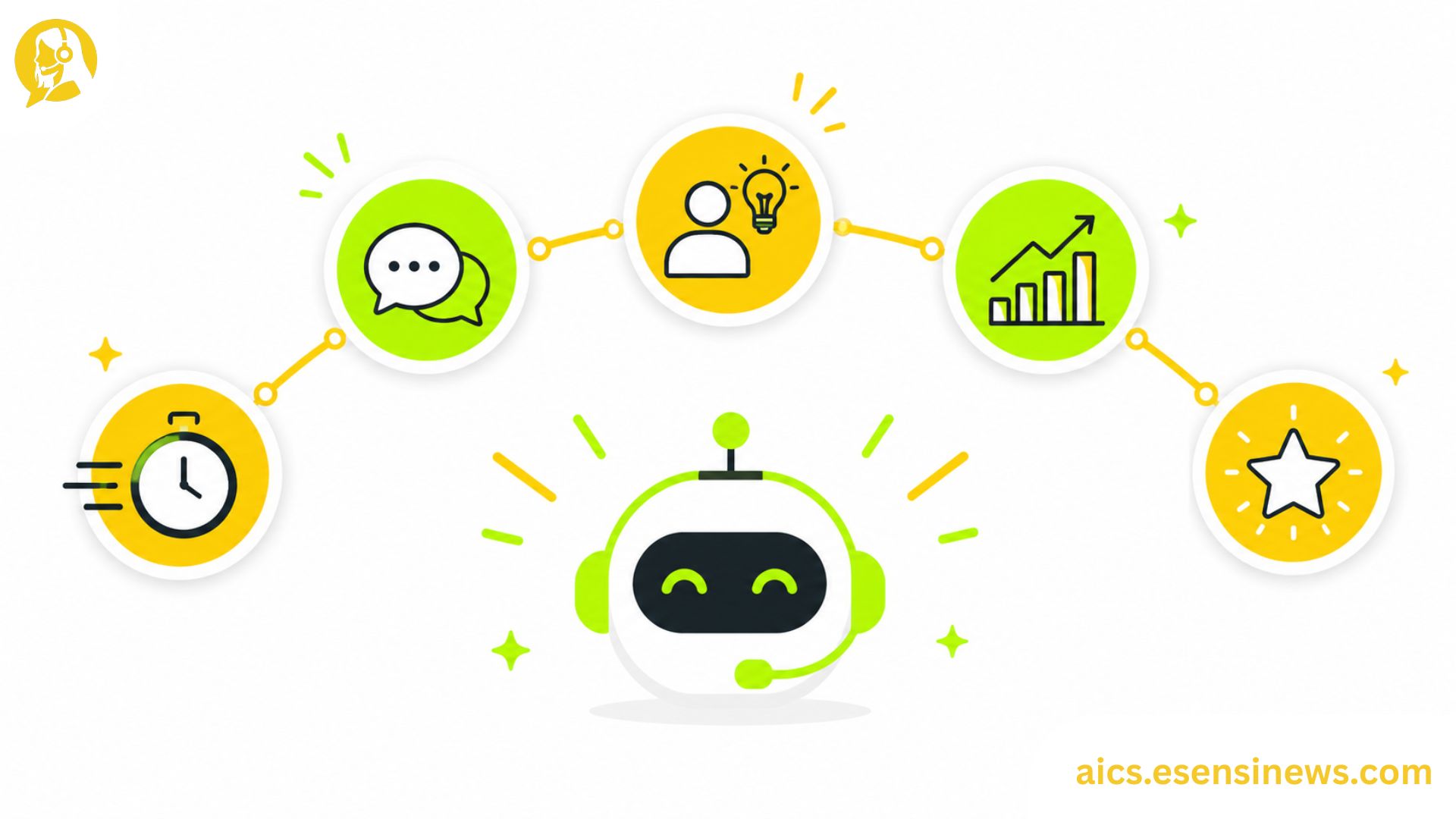
The phrase “helpdesk AI” covers a lot more ground than most people expect. It’s not just about adding a chatbot to your website or auto-sending a “we received your ticket” message. When helpdesk AI is implemented thoughtfully, it touches nearly every part of how customer support actually runs, from the moment a ticket arrives to how agents improve their skills over time.
For business owners and support managers, understanding exactly what changes, and what doesn’t, when helpdesk AI enters the picture is what separates a smart adoption decision from one that creates more complexity than it solves. The technology is genuinely useful. The key is knowing where it fits and what it changes so you can evaluate whether the fit makes sense for your specific operation.
This guide walks through five specific transformations that helpdesk AI enables, plus a clear look at where it still has limits and the practical steps to take if you decide to move forward.
What Helpdesk AI Actually Means in Practice
Helpdesk AI refers to artificial intelligence capabilities built into or integrated with a customer support system. These capabilities might include automatic ticket classification, AI-generated response suggestions, self-service automation, real-time agent guidance, and analytics that surface patterns across ticket data.
Not every helpdesk AI tool does all of these things, and the depth of each capability varies significantly between platforms. But these are the functional areas where helpdesk AI typically shows up, and understanding them is what makes evaluation conversations far more productive.
Transformation 1: From Manual Sorting to Intelligent Routing
One of the most immediate improvements helpdesk AI brings is smarter, faster ticket routing. Instead of a team lead manually reviewing each incoming ticket and deciding where it should go, AI classifies tickets based on content, urgency, customer history, and available agent expertise, then routes them automatically.
The result isn’t just faster routing. It’s more accurate routing. Tickets land with agents who actually have the context and skill to handle them, which reduces the number of times a ticket needs to be transferred or escalated after its initial assignment.
This might sound like a small thing, but in a busy support environment, accurate first-touch routing has a noticeable effect on resolution time and customer satisfaction.
Transformation 2: From Repetitive Typing to Instant First Drafts
A significant portion of support agent time goes toward writing responses that are, in essence, variations of the same answer they’ve written dozens of times before. Helpdesk AI changes this by generating draft responses based on ticket content, customer history, and relevant knowledge base information, so the agent starts from a good draft rather than a blank screen.
The agent still reviews and personalizes the response before sending, but the time investment drops substantially. More importantly, it frees up mental energy for the tickets that actually need creative problem-solving rather than consuming it on routine responses.
Transformation 3: From Reactive Support to Proactive Self-Service
Many helpdesk AI systems include self-service capabilities that allow customers to resolve common issues on their own before a ticket ever reaches an agent. AI-powered knowledge bases that understand natural questions, guided troubleshooting flows, and instant automated responses for frequently asked questions all reduce the volume of tickets that require human involvement.
Think of this like the difference between a store where you have to ask a staff member for help every time, and one where the layout makes it easy to find what you need on your own. Both options are useful, but the latter is faster for simple needs and frees staff for genuinely complex requests.
For support teams, this means the tickets that do reach agents tend to be more complex and more genuinely in need of human expertise, which shifts the nature of the work in a meaningful way.
Transformation 4: From Inconsistent Quality to Reliable Standards
Customer support quality naturally varies. Different agents have different strengths, and even the same agent performs differently on a slow Tuesday morning versus a hectic Friday afternoon with a full queue. Helpdesk AI introduces a layer of consistency by ensuring every agent has access to the same relevant information, the same response suggestions, and the same quality flags, regardless of when or how they’re working.
This doesn’t mean support becomes robotic or identical. Agents still personalize responses and bring their own judgment. But the baseline quality becomes more reliable because the AI support layer catches common gaps before they become customer complaints.
Transformation 5: From Intuition-Based Coaching to Data-Driven Development
Traditional helpdesk management involves supervisors reviewing a small, somewhat random sample of interactions to identify coaching opportunities. Helpdesk AI can analyze all interactions, identifying patterns in response quality, escalation triggers, resolution rates by ticket type, and agent performance across different kinds of requests.
This shifts agent development from anecdote-driven feedback to pattern-driven coaching. Supervisors can focus coaching conversations on the areas where the data shows the clearest opportunity, rather than relying on what happens to come up in a random weekly review.
Where Helpdesk AI Still Has Limits
Even with these five transformations, helpdesk AI doesn’t handle everything well. A few areas where human judgment still matters significantly:
- Emotionally complex or sensitive issues, where tone, empathy, and nuance matter more than speed or accuracy
- Novel or highly unusual problems that don’t fit established patterns in the training data
- Relationship-critical interactions, like enterprise account escalations or high-value customer retention conversations
- Judgment calls on policy exceptions, where the decision requires context that AI can’t fully assess
Knowing where helpdesk AI excels and where it still needs human support is what allows you to design a system that serves both agents and customers well.
Pros and Cons of Helpdesk AI
Pros ✅
- Faster ticket routing and resolution for common and repetitive issues
- Reduced repetitive workload for agents, improving engagement and retention
- More consistent support quality across the team and across shifts
- Better self-service options for customers who prefer to solve simple issues themselves
- Data-driven coaching that improves team performance more systematically
Cons ❌
- Requires quality training data to perform well from the start
- Needs ongoing tuning as products, policies, and customer language evolve
- Can feel impersonal if tone and design aren’t carefully considered
- Doesn’t handle emotionally complex situations well without human involvement
- Integration complexity varies depending on existing helpdesk infrastructure
Practical Tips for Adopting Helpdesk AI
- Start with one transformation at a time. Intelligent routing or draft response generation are often the lowest-risk, highest-impact starting points.
- Involve agents early in the process. Their feedback on what works and what feels off is invaluable for tuning the system quickly.
- Measure the right things from the start. Ticket volume, resolution time, agent satisfaction, and customer feedback all tell different parts of the story.
- Keep escalation to a human agent simple and obvious. Never make customers feel stuck without an exit.
- Review the data regularly, especially in the first few months, to catch inaccuracies before they become habits.
Common Mistakes Businesses Make When Adopting Helpdesk AI
- Expecting immediate, dramatic results before the system has had time to learn from real ticket data
- Automating too broadly too quickly, rather than starting with the most clearly suited use cases
- Forgetting to tell agents what’s changing and why, which leads to resistance rather than adoption
- Ignoring the self-service experience, which is often the most visible improvement to customers
- Treating the initial setup as complete rather than as the beginning of an ongoing improvement process
FAQ: Helpdesk AI
1. What does helpdesk AI actually do? Helpdesk AI automates ticket classification and routing, generates response drafts, powers self-service resolution, provides real-time agent guidance, and enables data-driven quality and coaching insights.
2. Does helpdesk AI replace support agents? No. It handles repetitive, predictable tasks so agents can focus on complex issues that genuinely need human judgment, empathy, and relationship skills.
3. How quickly does helpdesk AI improve ticket resolution speed? Basic improvements in routing and self-service deflection can be visible within weeks. Deeper gains from AI-assisted agent support typically build over months as the system learns from real interactions.
4. Is helpdesk AI suitable for businesses without a large support team? Yes. Many tools scale to smaller teams, and even limited AI assistance can significantly reduce the manual effort required for routine ticket handling.
5. What’s the most important thing to get right when implementing helpdesk AI? Keeping a clear, easy path to a human agent is arguably the single most important design decision, since customers who feel trapped without a human option quickly become frustrated.
6. How do you measure whether helpdesk AI is working? Track resolution time, first-contact resolution rate, agent satisfaction, ticket deflection rate, and customer satisfaction scores before and after implementation.
7. Can helpdesk AI handle upset or frustrated customers effectively? For emotionally charged interactions, human involvement is generally better. Helpdesk AI should flag high-frustration interactions for faster human escalation rather than attempting to handle them fully autonomously.
Conclusion
Helpdesk AI transforms customer support across five meaningful dimensions: smarter routing, faster response drafting, better self-service, more consistent quality, and data-driven agent development. None of these happen automatically, and none of them work perfectly from day one. But when implemented with clear goals, appropriate scope, and honest expectations, helpdesk AI genuinely shifts how support teams operate for the better.
The takeaway? Pick one transformation to start with, involve your team from the beginning, and measure what actually matters to your customers and agents. That’s how helpdesk AI becomes a lasting improvement rather than just another technology experiment.
Ready to Get Started?
If this guide gave you a clearer picture of what helpdesk AI can do, identify which of the five transformations matters most for your operation right now and explore what it would take to start there. Know a colleague or business owner dealing with the same support challenges? Share this with them. And if you’re planning to explore more AI tools for customer support, bookmark this page so it’s easy to find again. Here’s to support that’s genuinely better for everyone involved.


Leave a Reply