
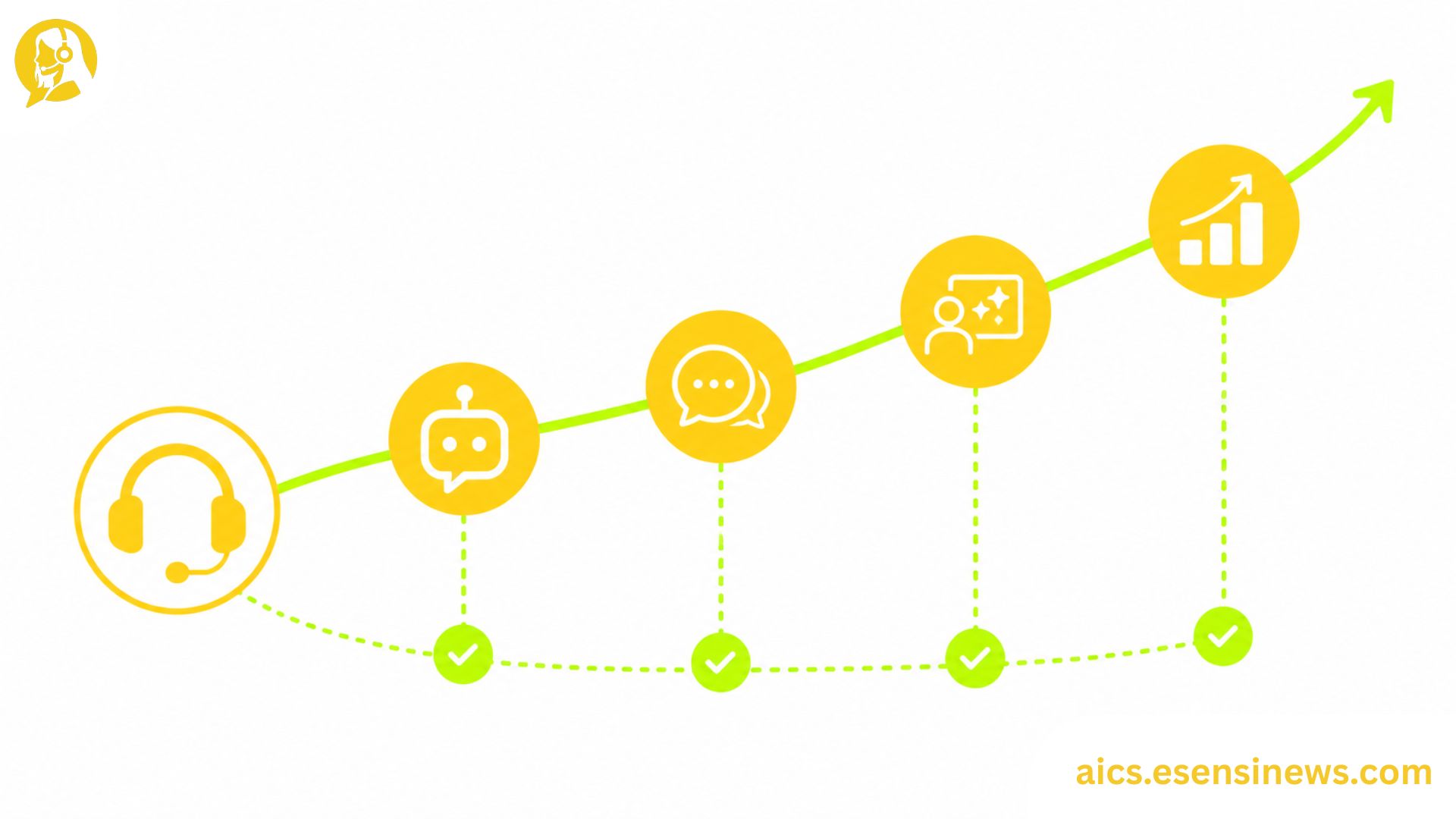
Bringing conversational AI into a contact center isn’t just a tech decision, it’s an operational one. As a call center manager or head of operations, you’re not just picking software. You’re changing how hundreds of daily calls get handled, how your agents spend their time, and how leadership measures success. That’s a much bigger lift than installing a new tool.
A lot of the conversational AI contact center conversations out there focus on features: smarter IVR, real-time transcription, sentiment detection. All useful, sure. But what actually determines whether a rollout succeeds or quietly fails six months later usually comes down to something less flashy, getting buy-in, building a real business case, and rolling it out in a way that doesn’t blindside your floor.
This guide is built specifically for that side of the equation. We’ll walk through the business case for conversational AI in a contact center, how to build buy-in across your team, a practical rollout roadmap, and the mistakes that tend to derail even well-intentioned adoption efforts.
What Conversational AI in a Contact Center Actually Changes Operationally
Before diving into strategy, it helps to ground this in what actually shifts on the floor once conversational AI is live.
- Call volume gets redistributed. Simple, repetitive calls get handled by AI, shifting agent time toward more complex or sensitive conversations.
- Onboarding changes. New agents can lean on AI-suggested responses during their first weeks, shortening the ramp-up period.
- Supervisor focus shifts. Instead of spot-checking random calls, supervisors can review AI-flagged conversations that actually need attention.
- Reporting gets richer. Conversation data becomes easier to analyze at scale, surfacing patterns that used to take weeks of manual review to spot.
None of this happens automatically just because the technology is in place. It happens because the rollout was planned with these shifts in mind.
The Business Case for Conversational AI in Your Contact Center
If you’re going to pitch this to leadership, you need more than “it’s the future.” Here’s where the real numbers tend to live.
1. Reduced Cost Per Call
By handling simple, high-volume requests automatically, conversational AI lowers the average cost of resolving routine issues, since fewer of them require a full agent interaction.
2. Lower Agent Attrition
Repetitive, low-engagement calls are a major driver of burnout in contact centers. Offloading those to AI can make the day-to-day role more engaging for agents, which often shows up in lower turnover over time.
3. Faster New Hire Ramp-Up
New agents supported by AI-suggested responses tend to reach full productivity faster, since they’re not relying purely on memory or constantly flipping through documentation mid-call.
4. Improved Scalability During Peak Periods
Conversational AI can absorb call spikes during peak seasons without requiring last-minute temporary hiring, which is often expensive and hard to manage well.
A simple way to frame this for leadership: think of conversational AI like adding an extra shift of support that never gets tired, never calls in sick, and costs a fraction of traditional staffing during high-volume periods.
How to Build Buy-In Across Your Operations Team
This is often the part that gets skipped, and it’s usually the reason rollouts struggle later on.
Get Agents Involved Early, Not After Launch
Agents are the ones who’ll be working alongside this technology daily. Bring a small group into the conversation early, ask what frustrates them most about repetitive calls, and use that input to shape the rollout.
Address the “Will This Replace My Job” Question Directly
This concern is real, and dodging it makes things worse. Be upfront about how the technology is meant to reduce repetitive workload, not eliminate the team, and back that up with how roles will actually shift.
Loop In Supervisors as Champions
Supervisors who understand the tool well can help troubleshoot floor-level concerns faster than a corporate announcement ever could. Equip them early so they’re prepared to support their teams.
Bring Executives Real Numbers, Not Just Vision
Leadership tends to respond better to a clear pilot plan with measurable KPIs than to broad statements about innovation. Tie the pitch back to cost, attrition, and service level metrics they already track.
A Practical Rollout Roadmap for Conversational AI in Contact Centers
- Select a small pilot team. Choose one queue or shift to start, rather than rolling out across the entire floor at once.
- Capture baseline metrics first. Document current AHT, FCR, and CSAT scores before launch, so you have a clear before-and-after comparison.
- Train agents on how to work alongside the AI. This includes when to trust suggestions and when to override them entirely.
- Run the pilot for a defined period. Give it enough time, usually four to eight weeks, to gather meaningful data rather than reacting to early hiccups.
- Review results with both data and direct agent feedback. Numbers tell part of the story, but frontline input fills in the rest.
- Scale gradually, one queue or shift at a time. Avoid the temptation to roll out everywhere at once just because the pilot looked promising.
Pros and Cons of Conversational AI in Contact Centers
Pros ✅
- Reduces cost per call for routine, high-volume requests
- Helps lower agent burnout by reducing repetitive call load
- Speeds up new hire ramp-up time with real-time AI assistance
- Improves scalability during seasonal or unexpected volume spikes
- Generates richer reporting data for supervisors and leadership
Cons ❌
- Requires real change management effort, not just a technical rollout
- Can create agent anxiety if communication around job impact isn’t handled carefully
- Needs a defined pilot phase, which takes patience before scaling
- Voice AI accuracy can vary depending on call quality, accents, and background noise
- Ongoing tuning is required as call patterns and customer needs evolve
Practical Tips for Call Center Managers
- Pick a pilot queue with high call volume but low complexity. This makes the impact easier to measure and explain to leadership.
- Set a clear escalation path from day one. Agents and customers both need a fast, simple way to bypass AI when needed.
- Hold weekly check-ins during the pilot. Short, regular feedback sessions catch issues long before they become bigger problems.
- Document wins early and share them widely. A quick story about a reduced hold time goes a long way in building broader team trust.
- Revisit your KPIs every quarter. What counts as success in month one may shift as the team becomes more comfortable with the technology.
Common Mistakes Call Center Leaders Make During Adoption
- Rolling out across the entire floor at once, instead of starting with a focused pilot
- Skipping agent involvement early on, which often leads to resistance later
- Failing to capture baseline metrics, making it hard to prove real impact afterward
- Avoiding the “job security” conversation, which only fuels rumors and anxiety
- Treating the rollout as a one-time project instead of an ongoing process that needs regular review
FAQ: Conversational AI Contact Center
1. What is conversational AI in a contact center? It refers to AI systems that understand and respond to natural spoken or written language, helping handle calls and chats in a contact center alongside or instead of human agents.
2. How do I build a business case for conversational AI in my contact center? Focus on measurable factors like cost per call, agent attrition, new hire ramp-up time, and scalability during peak periods.
3. Will conversational AI replace contact center agents? Not entirely. It typically handles repetitive, high-volume requests, freeing agents to focus on complex or sensitive conversations.
4. How long should a conversational AI pilot run in a contact center? Most teams see meaningful results within four to eight weeks, enough time to gather solid data without rushing the evaluation.
5. How do I get agent buy-in for conversational AI adoption? Involve agents early, address job security concerns directly, and use their feedback to shape how the rollout actually happens.
6. What metrics should I track during a conversational AI rollout? Average handle time, first call resolution, CSAT, and agent attrition are strong starting points for measuring real impact.
7. What’s the biggest risk when adopting conversational AI in a contact center? Rolling out too quickly without a clear pilot phase or proper change management is the most common reason adoption efforts stumble.
Conclusion
Conversational AI contact center adoption isn’t really about the technology itself, it’s about how thoughtfully you bring your team along for the change. The contact centers that see real, lasting results aren’t necessarily the ones with the flashiest tools. They’re the ones that build a solid business case, get agents involved early, and roll things out gradually with clear metrics guiding every step.
The takeaway? Start with a focused pilot, measure what matters, and keep your team in the loop the whole way through. That’s how conversational AI becomes a genuine operational win instead of just another tool that quietly gathers dust.
Ready to Build Your Adoption Plan?
If this guide gave you a clearer starting point, pick one queue or shift and start sketching out a pilot plan using the roadmap above. Know another contact center leader weighing the same decision? Pass this along to them. And if you’re planning to explore more AI adoption strategies for your operations team, bookmark this page so it’s easy to find again. Here’s to a smoother rollout and a team that feels genuinely supported through the change.


Leave a Reply