
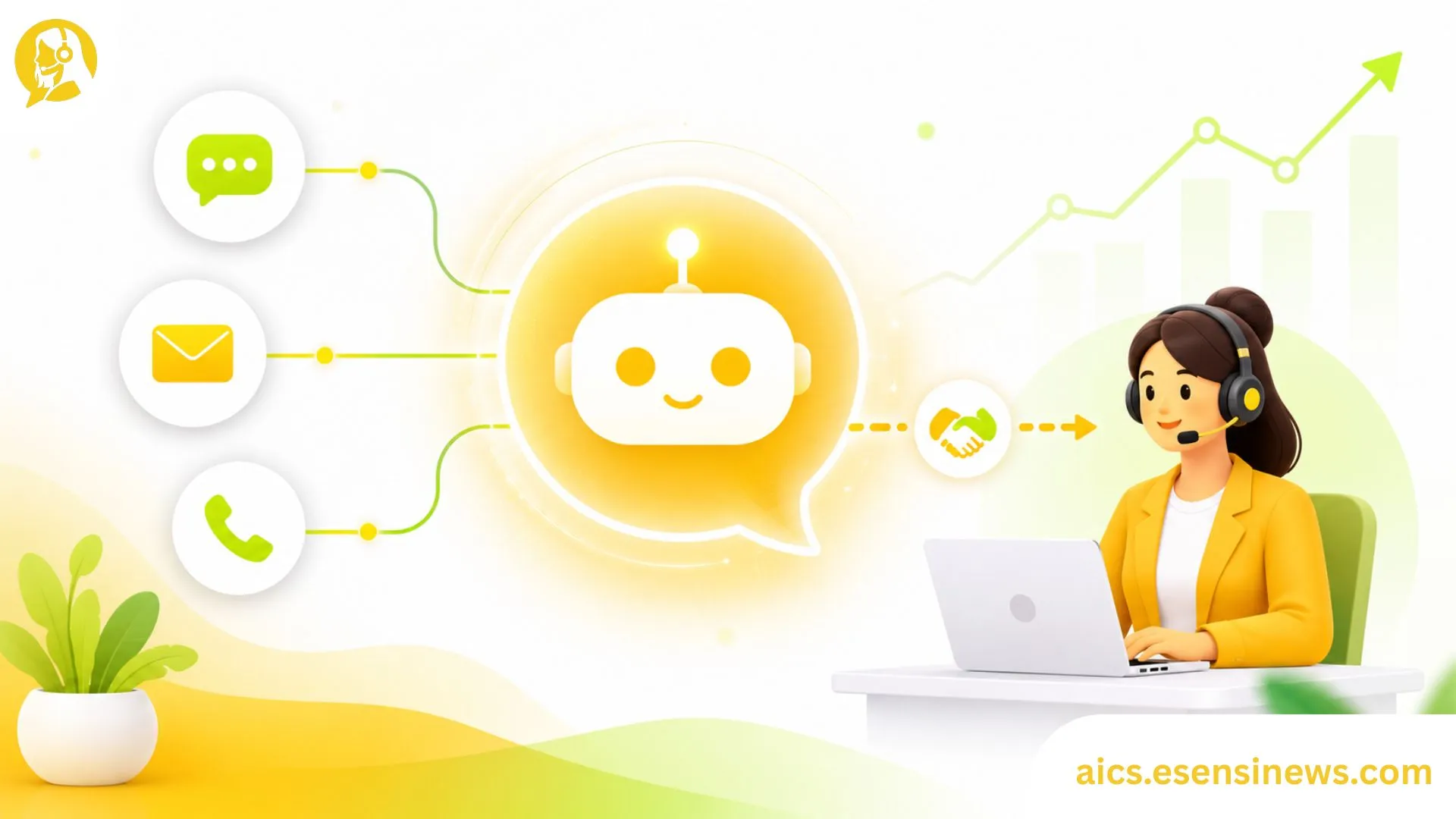
AI customer support has moved past the awkward chatbot phase where you’d type “agent” five times just to escape a script. Today’s tools actually understand context, pull account history before responding, and hand off to a human agent when the conversation genuinely needs one. That shift matters because customer patience for bad support has gotten shorter, not longer people expect an answer in minutes, not a callback in two business days.
I’ve watched support teams roll this out across very different industries, from retail to SaaS, and the pattern is consistent: the tech itself isn’t magic, but paired with decent training data, it closes the gap between “we’re swamped” and “we’re handling it” faster than hiring ever could.
The Evolution of Customer Service Technology
Customer service used to mean a phone line and, eventually, an email inbox that nobody checked fast enough. Live chat showed up in the early 2000s and helped, but it still required a human typing on the other end every single time.
From Scripted Bots to Context-Aware AI
Early chatbots were glorified decision trees “Click here for billing, click here for returns” and they broke the second a customer phrased something unexpectedly. Modern AI-powered support tools work differently. They interpret intent from natural phrasing, pull relevant order or account data, and adjust the response instead of dead-ending into “I’m sorry, I didn’t understand that.”
Benefits of AI Support in Customer Service
The reasons businesses adopt AI customer support aren’t really about novelty. They’re about closing specific, expensive gaps in traditional support models.
Always-On Availability
A customer in Manila messaging at 3 a.m. local time doesn’t care that your support team works 9-to-5 in Chicago. AI-driven support closes that timezone gap without anyone working a graveyard shift.
Multilingual Reach
Hiring native speakers for every market you sell into is expensive and slow. Modern AI support tools handle dozens of languages out of the box, which matters a lot once you’re selling outside your home country.
Consistent Brand Voice
A new hire on week two might phrase things awkwardly. AI doesn’t have a learning curve for tone once it’s properly configured, which keeps every interaction sounding like the same brand.
Key AI Technologies Transforming Customer Service
A few categories of tools are doing most of the actual work behind a modern AI support stack.
| Technology | Core Function | Typical Business Use |
|---|---|---|
| AI Chatbots (NLP-based) | Handles text-based inquiries with intent recognition | Website and app chat support |
| Voice AI Assistants | Manages phone-based customer interactions | Order status, appointment booking |
| Agent-Assist Tools | Suggests responses to live human agents in real time | Faster, more consistent agent replies |
| AI Knowledge Base Search | Surfaces relevant help articles automatically | Self-service deflection |
| Predictive Ticket Routing | Sends tickets to the right team or specialist | Reducing internal transfer delays |
Pricing across these categories varies quite a bit. Standalone chatbot platforms often start around $50-$150 per month for small teams, while full enterprise suites bundling voice, chat, and agent-assist tools commonly run $300-$800+ per month depending on ticket volume and seat count.
Implementing AI Solutions: Best Practices
Rolling out AI-powered customer service isn’t a plug-and-play afternoon project, even though some vendor demos make it look that way. Real talk: the businesses that get the best results treat the first 90 days like training a new hire, not flipping a switch.
Start narrow. Pick your highest-volume, lowest-complexity ticket type order status, password resets, simple billing questions and let the AI own that fully before expanding scope. Feed it your actual historical ticket data instead of generic templates, since generic training data is exactly why so many early chatbots felt clueless.
If you’re comparing premium platforms for a mid-size or enterprise rollout, it’s worth reviewing detailed feature and pricing breakdowns before a sales call you can browse a full comparison of AI-powered customer service platforms and pricing to get a realistic budget range before vendors start pitching add-ons you don’t need yet.
Case Studies: Successful AI Integration in Customer Service
A subscription box company (details anonymized for privacy) integrated an AI-powered support tool to handle its highest-volume request: subscription pause and skip-month inquiries. Before the rollout, these made up close to 30% of total ticket volume. After three months, AI resolved roughly 70% of those requests without human involvement, and the support team’s average response time on remaining tickets dropped from 6 hours to under 90 minutes.
A community manager from a SaaS forum described the shift this way:
“Our team stopped feeling like they were drowning. The boring tickets disappear into the AI queue, and we actually get to solve interesting problems again.”
That’s honestly the most common reaction I’ve heard secondhand from support leads less about flashy automation, more about relief from repetitive volume.
Challenges and Limitations of AI in Customer Support
No honest article skips this part, so here’s the unfiltered list.
Key Challenges
- Resolving highly nuanced or multi-issue tickets remains difficult for many AI systems.
- Significant time and effort are often required to prepare, clean, and organize training data before deployment.
- Customer trust can be a barrier, especially among users who prefer speaking with a human agent.
- Regular retraining and monitoring are necessary to maintain response quality over time.
- Integration with legacy systems may increase implementation complexity and project timelines.
- Escalation workflows must be carefully designed to prevent frustrating customer experiences.
In my experience, the most underestimated cost is not the software license itself but the internal effort required to keep training data accurate and up to date. Organizations that treat AI deployment as a one-time project often see performance and response quality gradually decline within a few months.
Future Trends in AI Customer Service
Proactive support is the trend worth watching most closely. Instead of waiting for a customer to report a shipping delay, AI-driven support tools are increasingly flagging the issue and reaching out first which tends to land much better than an apologetic response after the complaint. Voice AI is also getting noticeably better at handling longer, multi-turn conversations without losing the thread, something that was a clear weak spot even two years ago.
There’s also more crossover happening between support AI and sales AI, where a support conversation can surface an upsell opportunity without feeling pushy. For ongoing coverage of where these tools are headed, the AI contact center resource hub tracks new releases and vendor comparisons as they come out.
Measuring the Impact of AI on Customer Satisfaction
Numbers matter more than vibes when you’re justifying the spend internally.
| Metric | Before AI Support | After AI Support (6 months) |
|---|---|---|
| Average first response time | 4-6 hours | Under 5 minutes |
| Ticket resolution time (overall) | 1-2 days | 4-8 hours |
| CSAT score | 3.7 / 5 | 4.3 / 5 |
| Net Promoter Score (NPS) | +18 | +29 |
| Cost per resolved ticket | $5-$8 | $2-$3.50 |
Businesses achieve these results only when they manage implementation effectively. Ticket complexity, training quality, and rollout execution play a major role in determining the final outcome.
Frequently Asked Questions
What exactly is AI customer support? It’s the use of AI tools like chatbots, voice assistants, and agent-assist software to handle or support customer inquiries, often combined with human agents for complex cases.
Is AI-powered customer support reliable for handling complaints? Yes. AI-powered customer support can reliably handle routine and straightforward complaints. However, businesses often rely on human agents to resolve complex, emotionally sensitive, or highly nuanced issues that require empathy and critical judgment.
How much does AI-powered support cost for a small business? Basic chatbot tools often start around $50-$150 monthly, while full enterprise suites with voice and analytics typically run several hundred dollars or more per month.
Will AI support replace human support agents? Most businesses use it to absorb repetitive, high-volume tickets, shifting human agents toward complex or sensitive cases rather than eliminating roles entirely.
How long does it take to see results after implementing AI support? Many teams see measurable response-time improvements within the first month, with fuller CSAT and cost gains typically showing up around the three- to six-month mark.
Embracing AI for Enhanced Customer Experience
AI customer support works best as a force multiplier, not a replacement strategy. The technology handles repetition and volume with real consistency; people still handle the judgment calls, the apologies that need to feel genuine, and the edge cases nobody scripted for. Businesses that approach it as an ongoing process feeding it real data, checking its blind spots, adjusting as needed tend to see results that actually hold up past the initial rollout excitement.
If you’re ready to see what a tailored AI-powered support setup could look like for your team, explore AI-powered customer support solutions and compare your options before committing to a contract.
Last updated: June 2026


Leave a Reply