
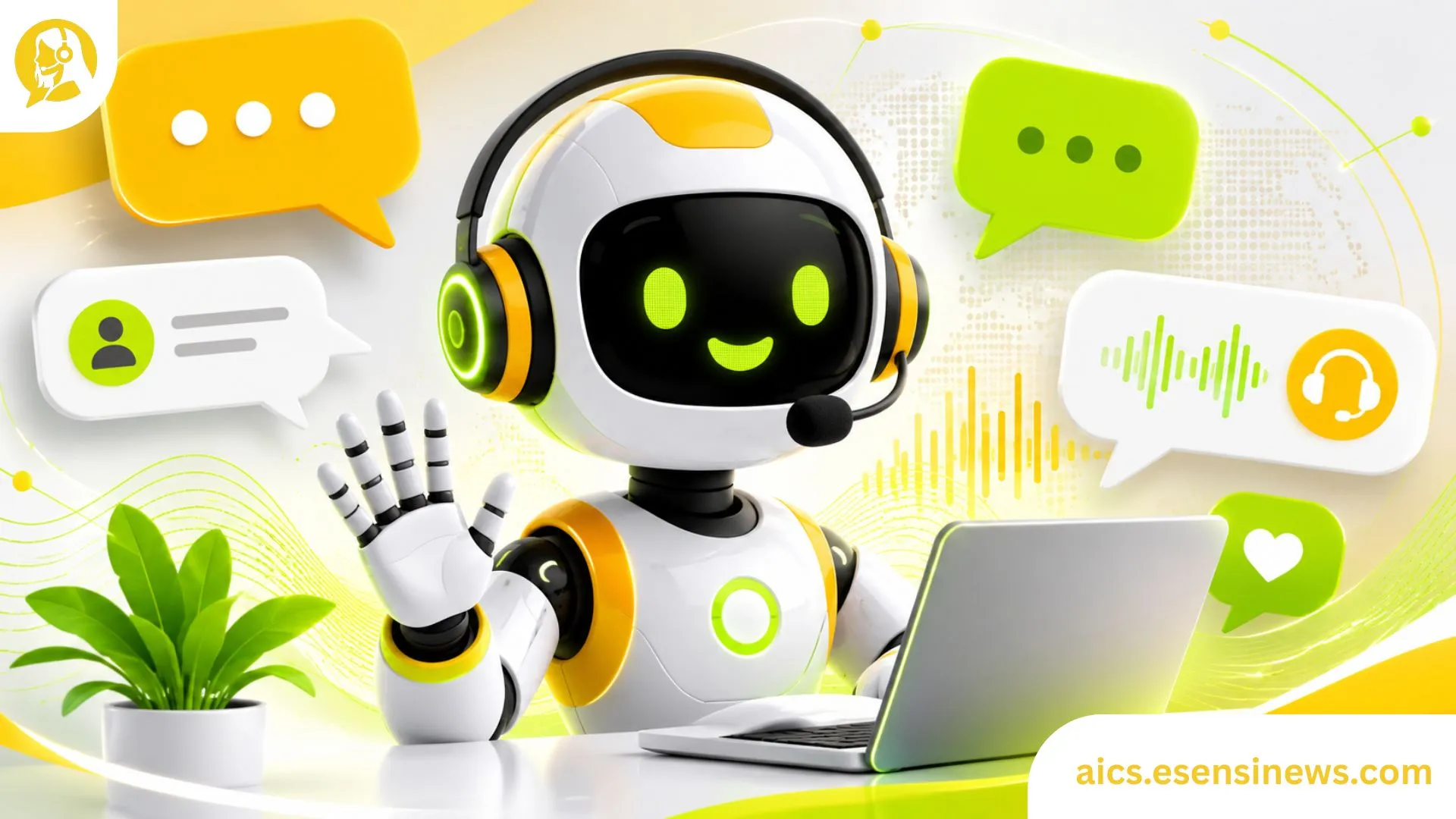
Picture this: a customer calls at 11:47 PM about a billing error, gets an answer in 90 seconds, and never once feels like they’re talking to a machine that doesn’t get it. That’s not a hypothetical anymore it’s what a properly built AI call center agent does every single day for companies that have actually figured out the implementation.
I’ve reviewed dozens of these platforms over the past few years, sat in on vendor demos that overpromised, and watched a few rollouts genuinely fall flat. So this isn’t a sales pitch. It’s a grounded look at what an AI call center agent actually is, what it can realistically do for your support operation, and where it still needs a human standing right behind it.
Last updated: June 2026.
The Evolution of Call Center Technology
Call centers spent decades running on the same basic formula: a phone, a headset, a script, and a queue that got longer every holiday season. The first real tech upgrade was the IVR system in the late ’90s press 1, press 2, get mildly annoyed, eventually reach a human.
Cloud-based platforms showed up in the 2010s and made things faster on the backend, pulling customer records up automatically. Still, every conversation needed a person on the other end. The real inflection point came once language models got good enough to actually carry a conversation instead of just recognizing keywords, somewhere around 2023-2024. A 2025 Gartner report projected that a significant share of customer interactions would involve some form of AI agent by 2027, a number that would have sounded absurd just five years earlier.
Now we’re at the point where this kind of virtual agent doesn’t just answer a script it can pull account history, cross-reference a return policy, and adjust its tone based on whether the caller sounds frustrated or just mildly confused. It’s the difference between a vending machine and a barista who actually remembers your order.
What are AI Call Center Agents?
An AI call center agent is software, not a person built on natural language processing and speech recognition, designed to handle phone (and often chat) interactions either fully autonomously or as a copilot sitting alongside a human rep. There’s a meaningful difference between the two modes, and a lot of buyers get this confused.
Fully Autonomous Agents
These handle the entire call start to finish greeting, intent recognition, resolution, and closing without a human ever joining unless the AI escalates. Good for high-volume, low-complexity calls like order tracking or appointment scheduling.
Agent-Assist (Copilot) Mode
Here, a human agent stays on the call, but the AI listens in real time, suggests responses, pulls up relevant account data, and drafts a post-call summary. Less flashy, but often the safer entry point for businesses nervous about full automation.
Either way, the underlying tech stack typically includes automatic speech recognition (ASR), a large language model for understanding and generating responses, and integration with a company’s CRM or knowledge base so the agent isn’t just guessing.
Benefits of Implementing AI Call Center Agents
The upside isn’t theoretical there’s enough deployment data now to make a real case.
- Round-the-clock coverage. An AI call center agent doesn’t clock out at 6 PM, which matters a lot for businesses with customers across time zones.
- Faster resolution on simple requests. Routine tasks password resets, order status, appointment changes typically resolve in under 90 seconds versus several minutes in a traditional queue.
- Lower staffing pressure during spikes. Black Friday, tax season, open enrollment whatever your industry’s chaos window is, an AI agent absorbs volume without an emergency hiring sprint.
- Consistent compliance language. A human agent might forget a required disclosure on a stressful day. The AI doesn’t.
- Real cost reduction. PwC’s 2025 customer service benchmarking research noted that companies using AI-assisted agents for routine calls reported handling cost reductions in the range of 20-30%, mainly from deflecting calls away from higher-cost senior staff.
None of this means firing your support team. The strongest results, consistently, come from pairing an AI call center agent with experienced humans rather than trying to go fully automated overnight.
Key Features of AI Call Center Solutions
Vendors throw around a lot of buzzwords, so here’s what actually matters when you’re comparing options, with rough pricing so you walk into a sales call with realistic expectations.
| Feature | What It Does | Typical Use Case | Approx. Cost (Monthly) |
|---|---|---|---|
| Voice AI agent (autonomous) | Handles entire calls end-to-end | High-volume, repetitive queries | $400–$3,000+ base, usage billed separately |
| Agent-assist copilot | Live suggestions for human agents | Reducing handle time, training new hires | $35–$90 per seat |
| Real-time sentiment scoring | Detects frustration or churn risk | Escalation triggers, QA | $150–$900 add-on |
| CRM/knowledge base integration | Keeps responses accurate and current | Any deployment with existing systems | Often included, sometimes $200+ setup fee |
| Multilingual support | Handles non-English callers natively | Retail, travel, healthcare | Varies, often tiered by language count |
Enterprise contracts almost always involve custom pricing based on call volume, so treat the numbers above as a starting point for budgeting conversations, not a final quote.
Comparing AI Agents to Traditional Call Center Agents
This is the comparison most buyers actually care about, so let’s lay it out plainly instead of dancing around it.
✅ Where AI Call Center Agents Win
- Speed on simple, repetitive requests
- Zero fatigue, zero off days, consistent tone
- Scales instantly without a hiring lag
- Generates structured data for every interaction automatically
❌ Where Human Agents Still Win
- Emotionally complex situations grief, frustration, genuine confusion
- Ambiguous, multi-part problems that don’t fit a clean script
- Building long-term relationship trust with high-value accounts
- Reading subtext that isn’t explicitly stated in the conversation
“Our AI agent crushes the easy stuff, but the second a call gets emotionally messy, it needs to hand off fast and cleanly. The handoff quality matters more than how smart the bot sounds,” a support operations manager wrote in a widely upvoted thread on a customer experience subreddit discussing real-world AI agent rollouts.
That tradeoff is really the whole story. An AI call center agent isn’t trying to out-human a human it’s trying to clear the runway so humans can do the part only they’re good at.
Challenges and Limitations of AI in Customer Service
Here’s the part vendors gloss over in their pitch decks. Voice AI still struggles with strong regional accents and noisy environments call from a warehouse floor or a moving car, and accuracy can drop noticeably. Integration with older phone systems (legacy PBX setups especially) can take months rather than weeks, no matter what the sales deck timeline promised.
There’s also a trust problem on both sides. Some customers still hang up the second they realize they’re talking to a bot, which is a real conversion loss for sales-adjacent support lines. And agents themselves sometimes view the rollout as a quiet prelude to layoffs, which tanks internal adoption fast if leadership doesn’t communicate clearly about what the AI is and isn’t replacing.
One more honest caveat: an AI call center agent that isn’t retrained regularly on new products, pricing, or policy changes will start giving outdated answers within months and customers notice immediately when that happens, often louder than they’d complain to a human who made the same mistake.
Case Studies: Successful Implementation of AI Call Center Agents
A few grounded examples, paraphrased from publicly reported results:
A national hotel chain deployed an AI call center agent to handle reservation changes and basic amenity questions across its call centers. Within roughly six months, reported call abandonment rates dropped by close to 35%, mainly because guests weren’t sitting on hold during checkout-rush hours anymore.
A mid-sized SaaS company used agent-assist copilot technology rather than a fully autonomous agent, worried that B2B clients would resent talking to a bot. Average handle time still dropped by about 20%, and onboarding time for new support hires reportedly shortened significantly since the AI surfaced relevant documentation automatically during live calls.
A regional utility provider rolled out an AI voice agent specifically for outage reporting and status updates during storm season a notoriously brutal call volume spike. The company reported handling several times its normal daily call volume during a major weather event without extending hold times past a few minutes, something that would have been impossible with their prior staffing model.
The consistent lesson: narrow, well-defined use cases outperform trying to automate the entire call center in one swing.
Future Trends in AI Customer Service Technology
A few developments worth watching heading into 2027. Voice quality is closing in on indistinguishable-from-human territory for short transactional calls, which is already raising disclosure questions in a handful of state legislatures. Emotionally adaptive AI agents that adjust pacing and tone based on detected stress levels in a caller’s voice is moving from research papers into actual commercial products.
There’s also a quieter but important shift toward smaller, company-specific fine-tuned models replacing giant general-purpose ones for narrow call center tasks, mainly because they’re cheaper to run at scale and easier to keep accurate on a specific product catalog. If you’re budgeting for an AI call center agent over the next year or two, that shift is worth asking vendors about directly it affects long-term cost more than almost anything else on the pricing sheet.
For deeper coverage on where this space is headed, our AI contact center resource hub tracks new agent capabilities and benchmark releases as they come out.
Buying-guide note worth sitting with: before signing any enterprise contract, ask specifically how the AI call center agent handles escalation handoffs, because that single workflow more than voice quality or feature count tends to determine whether customers actually like the experience or quietly start avoiding your phone line altogether.
Frequently Asked Questions
What exactly is an AI call center agent? It’s software that uses natural language processing and speech recognition to handle or assist with phone-based customer service calls, ranging from fully autonomous voice bots to copilot tools that support human agents in real time.
Are AI call center agents replacing human jobs? Mostly not outright. Most successful deployments use AI to absorb repetitive, low-complexity calls while reassigning human agents to higher-value, emotionally complex, or relationship-driven conversations rather than eliminating roles entirely.
How much does an AI call center agent cost? Pricing typically ranges from a few hundred dollars monthly for small-scale agent-assist tools up to several thousand dollars monthly, or custom enterprise pricing, for fully autonomous voice agents handling high call volumes.
Can an AI call center agent handle multiple languages? Many enterprise platforms support multilingual conversations natively, though quality and available language count vary significantly between vendors always test with native speakers before committing to a contract.
How do I know if my business is ready for an AI call center agent? Start by reviewing your call logs for the past 90 days. If a large share of calls are repetitive (order status, billing questions, appointment changes), you have a strong case. If most calls are complex or relationship-driven, an agent-assist tool is usually the safer starting point over a fully autonomous agent.
Conclusion: Embracing AI for Enhanced Customer Experience
An AI call center agent isn’t a magic fix, and treating it like one is how rollouts fail. But used deliberately handling the repetitive volume, supporting human agents in real time, and escalating cleanly when a conversation gets complicated it’s one of the more measurable upgrades a support operation can make in 2026. The data backs it up: faster resolutions, lower cost per contact, and agents who get to spend their energy on the calls that actually need a human.
If you’re weighing whether an AI call center agent fits your support operation, start with your own call data before you start taking vendor demos. You can compare current platforms and read deployment breakdowns at aics.esensinews.com to see which options actually match your call volume and budget.


Leave a Reply