
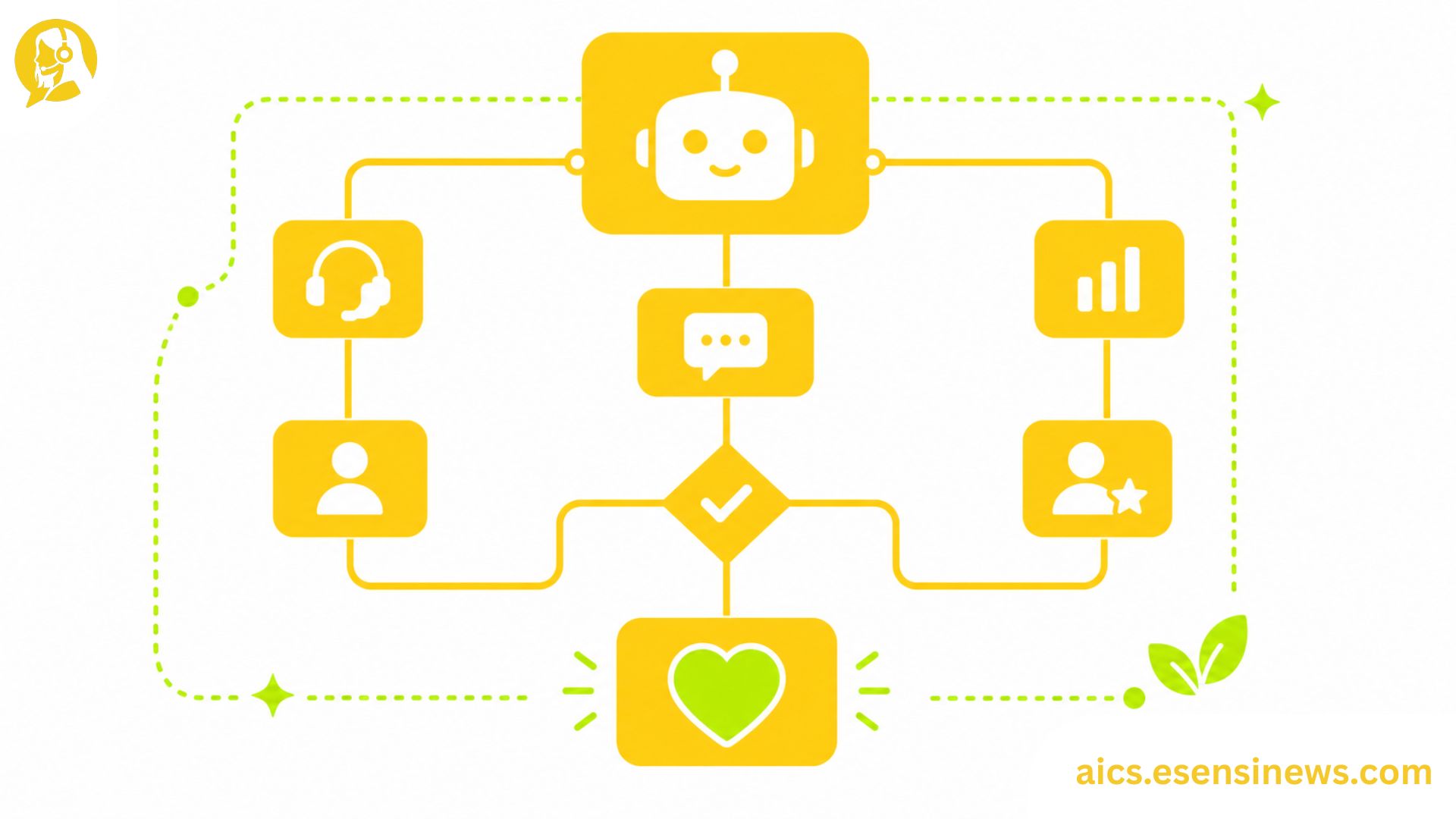
Knowing that AI customer care can strengthen loyalty and reduce churn is one thing. Actually building it into your team’s day-to-day operations is a completely different challenge. A lot of CX teams get the “why” right but stumble on the “how,” ending up with AI that’s technically working but isn’t really shifting how the team operates or how customers experience support.
That gap usually comes down to a few specific things: tracking the wrong metrics, designing workflows that still feel purely transactional, and not preparing the team for what a genuine care-first mindset actually requires alongside AI tools. None of these are complicated fixes, but they do require intentional planning rather than just flipping a switch on new software.
This guide walks through how to actually build AI customer care into your operation, the metrics that matter beyond pure speed, a practical workflow framework, and how to prepare your team for the shift.
What Makes AI Customer Care Different to Build, Not Just Use
Most AI customer service rollouts focus on operational metrics, response time, resolution rate, ticket volume. Building genuine AI customer care requires layering in something extra: signals that reflect the actual relationship, not just transaction efficiency.
This distinction matters because optimizing purely for speed can sometimes work against care. A fast, robotic response might close a ticket quickly while quietly damaging the relationship. Building AI customer care properly means designing for both efficiency and genuine connection at the same time.
Metrics That Actually Measure Care, Not Just Speed
1. Customer Effort Score
This measures how easy customers feel it was to get their issue resolved, capturing friction that pure resolution time misses entirely. A fast resolution that still felt frustrating won’t score well here.
2. Net Promoter Score Shift After Support Interactions
Rather than just tracking overall NPS, look specifically at how scores shift immediately following AI-assisted interactions. This shows whether your AI customer care approach is actually strengthening loyalty, not just closing tickets.
3. Retention and Renewal Rate Among Engaged Customers
Track whether customers who receive proactive AI-supported outreach show better retention or renewal rates compared to those who don’t. This connects your care efforts directly to long-term business impact.
4. Proactive Outreach Success Rate
Measure how often proactive, AI-flagged outreach actually leads to a positive outcome, whether that’s resolving a brewing issue, preventing churn, or simply making a customer feel genuinely looked after.
Together, these four metrics give you a much fuller picture than resolution time and ticket volume alone ever could.
How to Build an AI-Supported Customer Care Workflow
- Map your current customer journey, identifying moments where proactive care could replace purely reactive responses.
- Identify where AI can flag opportunities, like usage drops, repeated complaints, or upcoming renewal dates.
- Design a clear handoff process, so flagged opportunities reach the right team member with enough context to act meaningfully.
- Build response time expectations for proactive outreach, not just reactive tickets, since timing matters for these moments too.
- Create feedback loops, so your team can report back on which AI-flagged opportunities actually led to meaningful outcomes.
- Review and refine the workflow regularly, adjusting based on what your team and customers are actually experiencing.
Training Your Team for a Care-First Mindset Alongside AI
Shift the Framing From “Closing Tickets” to “Strengthening Relationships”
Help your team understand that success now includes proactive, relationship-building moments, not just fast resolutions. This often requires updating how performance gets discussed and recognized internally.
Teach Agents to Use AI Flags as Conversation Starters, Not Scripts
When AI flags a churn risk or proactive opportunity, agents need the skills to turn that into a genuine, personalized conversation rather than reading from a generic template.
Build Comfort With Ambiguity
Care-focused conversations are less predictable than straightforward ticket resolution. Agents need support and practice navigating these less scripted, more relationship-driven interactions confidently.
Pros and Cons of Building a Formal AI Customer Care Model
Pros ✅
- Creates measurable accountability around relationship-building, not just speed
- Helps justify AI investment with metrics tied directly to retention and loyalty
- Gives agents clearer guidance on what genuine care looks like in practice
- Builds a stronger long-term customer experience, beyond just efficient ticket handling
- Differentiates your support team in a market where speed alone is increasingly table stakes
Cons ❌
- Requires more upfront planning than a purely efficiency-focused AI rollout
- New metrics take time to establish baselines and prove clear correlation with outcomes
- Demands additional agent training, beyond just learning new software
- Can be harder to measure ROI quickly, since relationship impact often shows up over a longer timeframe
- Requires cross-team alignment, since care often touches sales, success, and support together
Practical Tips for Implementing AI Customer Care
- Start with one proactive use case, like flagging declining engagement, before building out a full care workflow.
- Pair every AI flag with a clear, simple action step for agents, so opportunities don’t get missed in the noise.
- Track your four core metrics from day one, even before you have a full year of data to compare against.
- Involve your most relationship-savvy agents early, since their instincts can help shape what good care-focused outreach actually looks like.
- Share early wins internally, especially stories where proactive AI-flagged outreach clearly prevented churn or strengthened a relationship.
Common Mistakes Teams Make Building AI Customer Care
- Measuring success purely by speed and volume, missing the relationship side entirely
- Treating AI flags as scripts instead of conversation starters that still need a human touch
- Skipping team training on what a genuine care-first mindset actually looks like
- Failing to create feedback loops, so the workflow never improves based on real outcomes
- Underestimating the cross-team coordination needed to make proactive care actually work
FAQ: AI Customer Care
1. How is AI customer care different from AI customer service? AI customer care focuses on the broader relationship and proactive engagement, while AI customer service typically emphasizes efficient resolution of individual issues.
2. What metrics matter most for AI customer care? Customer effort score, NPS shift after interactions, retention rate, and proactive outreach success rate offer a fuller picture than speed-based metrics alone.
3. How long does it take to build an effective AI customer care workflow? Most teams need a few months to establish a working process and start seeing meaningful patterns in their new care-focused metrics.
4. Do agents need special training for AI customer care? Yes. Beyond learning the tools, agents need training on turning AI-flagged opportunities into genuine, relationship-focused conversations.
5. Can small teams realistically implement AI customer care? Yes. Starting with one proactive use case, like churn-risk flagging, makes this approach accessible even for smaller support teams.
6. How do you measure ROI from AI customer care? Track retention and renewal rates among customers who receive proactive outreach compared to those who don’t, alongside shifts in customer effort and loyalty scores.
7. What’s the biggest mistake teams make when building AI customer care? Focusing purely on speed and ticket volume, while overlooking the relationship-building metrics that actually define genuine customer care.
Conclusion
Building real AI customer care takes more than just turning on a new tool, it requires rethinking your metrics, redesigning workflows around proactive moments, and training your team for a more relationship-focused way of working. Done well, it creates a genuine, measurable difference in loyalty and retention, not just faster ticket resolution.
The takeaway? Track metrics that reflect real relationships, build workflows that support proactive outreach, and prepare your team for a mindset shift, not just a software update. That’s how AI customer care becomes a true competitive advantage instead of just another efficiency play.
Ready to Start Building Your AI Customer Care Workflow?
If this guide gave you a clearer starting point, pick one metric and one proactive use case from this list and map out how it could work for your team this quarter. Know another CX manager working through the same challenge? Pass this along to them. And if you’re planning to explore more customer loyalty and retention strategies, bookmark this page so it’s easy to find again. Here’s to building care that actually shows up in the numbers.


Leave a Reply