
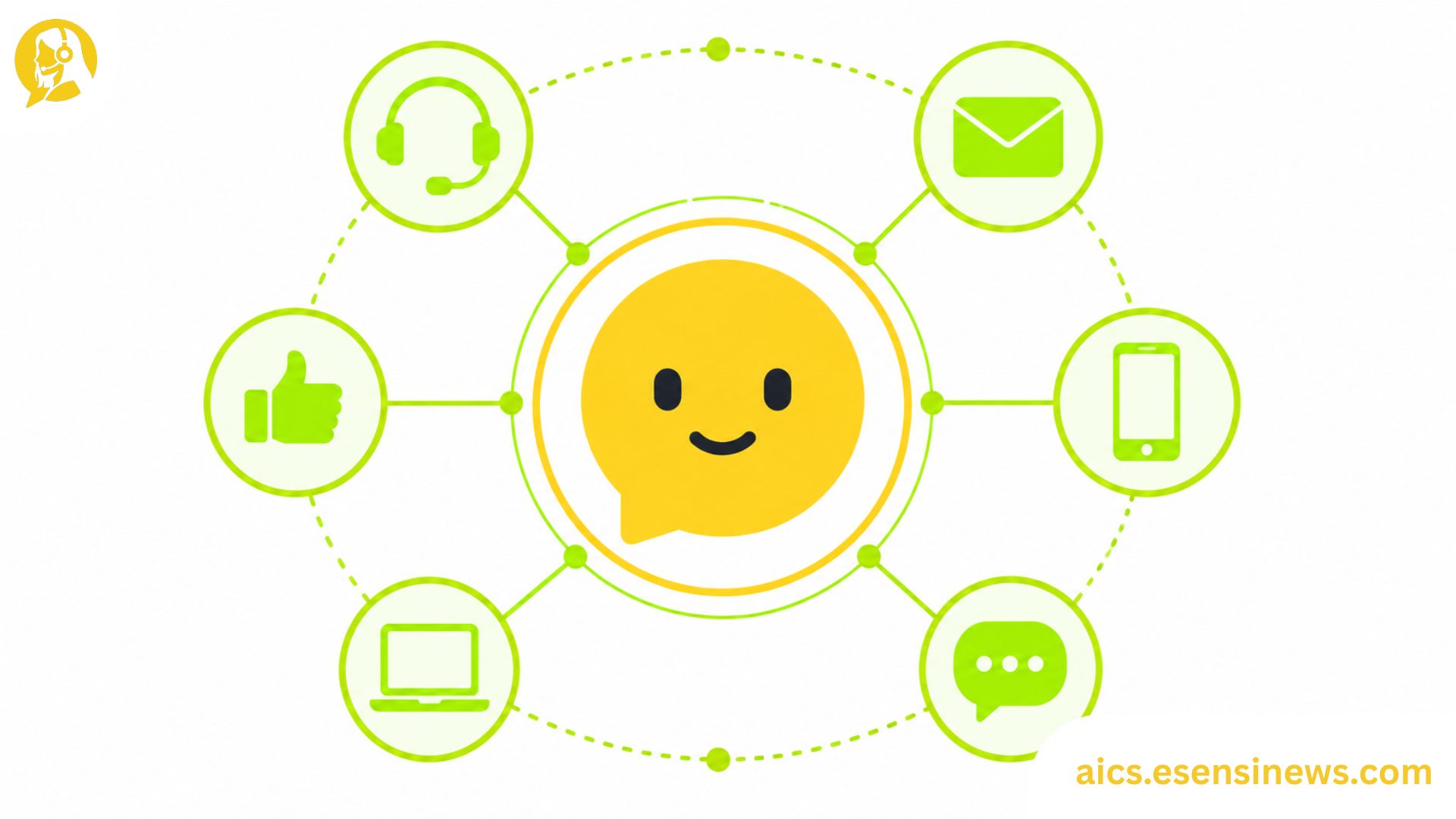
AI customer service has gone from a buzzy, somewhat experimental idea to something nearly every CX team is either using or actively evaluating. If you’re trying to wrap your head around what it actually means, how it works, and whether it makes sense for your team, you’re definitely not alone, and you’re in the right place.
This guide is meant to be the starting point. Rather than diving straight into one narrow use case, we’re covering the full picture: what AI customer service actually is, how it works, the different forms it takes, real benefits worth knowing, and a practical path for getting started. If you want to go deeper on a specific angle afterward, like conversational AI design, contact center applications, or vendor evaluation, this guide will point you in the right direction.
Let’s start with the basics and build from there.
What Is AI Customer Service?
At its core, AI customer service refers to the use of artificial intelligence, like machine learning and natural language processing, to handle, support, or improve customer interactions. This can mean a chatbot answering simple questions, an AI tool quietly assisting a human agent during a live call, or a system that automatically routes tickets based on urgency and intent.
It’s important to understand that AI customer service isn’t one single product. It’s more like a broad category covering many different tools and approaches, all aimed at the same general goal: helping customers get answers faster while reducing the repetitive workload on human teams.
A Simple Way to Picture It
Think of AI customer service like a really capable assistant who never gets tired, handles the routine stuff instantly, and knows exactly when to pull in a teammate for anything more complicated. That’s the role AI is increasingly playing across modern support teams.
How AI Customer Service Actually Works
Most AI customer service tools rely on a few core technologies working together behind the scenes:
- Natural language processing (NLP) helps the system understand what a customer is actually asking, not just matching exact keywords.
- Machine learning models improve over time as they process more real conversations, gradually getting better at recognizing patterns and intent.
- Integration with your existing systems, like your CRM or helpdesk, allows AI to pull relevant customer information and provide accurate, personalized responses.
Together, these pieces allow AI customer service to handle conversations that feel far more natural than the rigid, button-based chatbots many people remember from years past.
Types of AI Customer Service You’ll Encounter
AI customer service shows up in several different forms, often working together within the same support operation.
Conversational Chatbots
These handle direct customer conversations, answering common questions through text or voice using natural language understanding rather than fixed scripts.
Agent-Assist Tools
Rather than talking to customers directly, these work behind the scenes, suggesting responses or surfacing helpful information while a human agent handles the live conversation.
Voice AI for Phone Support
For contact centers, voice AI can transcribe calls in real time, detect caller sentiment, and even handle simple requests through natural spoken conversation.
Analytics and Quality Assurance Tools
These analyze large volumes of conversation data to spot trends, flag compliance risks, or highlight coaching opportunities that would be nearly impossible to catch manually.
Most mature support operations end up using a mix of these types rather than relying on just one.
Benefits of AI Customer Service
Here’s what makes AI customer service genuinely worth the investment for most teams:
- Faster response times, especially for repetitive, high-volume questions
- 24/7 availability, even outside your team’s normal working hours
- Reduced agent burnout, since routine tasks get offloaded from human workloads
- Greater consistency in tone and accuracy across every interaction
- Valuable data insights that help identify trends and recurring customer pain points
- Easier scalability during busy seasons without a proportional increase in headcount
Real-World Examples of AI Customer Service in Action
To make this more concrete, here’s how AI customer service typically shows up across different everyday scenarios:
- E-commerce: A customer asks about their order status at midnight and gets an instant, accurate answer without waiting for business hours.
- SaaS support: An agent handling a tricky technical issue gets a relevant help article suggested by AI mid-conversation, saving several minutes of searching.
- Banking: A customer receives a proactive alert about unusual account activity before they even notice it themselves.
- Travel: A traveler dealing with a delayed flight gets immediate rebooking options through an automated voice system, without waiting on hold.
These examples show how AI customer service adapts to very different industries and needs, while still solving the same core problem: helping customers faster.
Pros and Cons of AI Customer Service
Pros ✅
- Speeds up resolution times for common, repetitive issues
- Reduces operational costs over time compared to scaling purely with headcount
- Improves consistency across channels and shifts
- Frees up agents to focus on complex, high-value conversations
- Scales easily during unpredictable demand spikes
Cons ❌
- Can feel impersonal if tone and design aren’t handled thoughtfully
- Requires ongoing training and maintenance, not a one-time setup
- Struggles with highly nuanced or emotional situations
- Needs clear human escalation paths to avoid frustrating customers
- Initial implementation takes real time and planning
How to Get Started With AI Customer Service
- Identify your most repetitive, time-consuming ticket types. This is almost always the best starting point for any team.
- Choose one channel to pilot first. Don’t try to automate everything across every channel at once.
- Train the system using real customer conversations, not generic, off-the-shelf scripts.
- Always build in a clear path to a human agent. This single step prevents most common frustrations.
- Review performance regularly and adjust. Treat the first few months as an active tuning period, not a finished project.
Common Mistakes Teams Make With AI Customer Service
- Trying to automate everything at once, instead of starting with one focused use case
- Skipping agent involvement during rollout, missing valuable frontline insight
- Ignoring the need for a human handoff, which traps frustrated customers in unhelpful loops
- Failing to update AI knowledge as products, policies, or pricing change
- Choosing tools based on hype rather than actual fit for the team’s specific needs
FAQ: AI Customer Service
1. What is AI customer service? AI customer service uses artificial intelligence, like machine learning and natural language processing, to handle or assist with customer interactions across channels.
2. Does AI customer service replace human agents? No. It’s designed to handle repetitive, high-volume tasks, freeing human agents to focus on complex or emotionally sensitive conversations.
3. Is AI customer service only for large companies? Not at all. Many tools offer scalable pricing, making AI customer service accessible for small and mid-sized teams as well.
4. How long does it take to implement AI customer service? A basic pilot can often launch within a few weeks, though full integration and fine-tuning typically take longer.
5. What’s the biggest risk with AI customer service? Over-automating without a clear human escalation path is one of the most common risks, since it can leave customers feeling stuck.
6. How do you measure the success of AI customer service? Track metrics like resolution time, customer satisfaction scores, deflection rate, and agent productivity before and after implementation.
7. What industries benefit most from AI customer service? E-commerce, SaaS, banking, telecom, and travel are among the industries seeing especially strong results, largely due to high ticket volumes and repetitive question types.
Conclusion
AI customer service isn’t a single tool or a passing trend, it’s a broad, evolving category that’s reshaping how support teams operate day to day. From chatbots and agent-assist tools to voice AI and analytics, the right mix depends entirely on your team’s specific challenges and goals.
The biggest takeaway? Start small, focus on your most repetitive pain points first, and always keep a human safety net in place. Done thoughtfully, AI customer service becomes less of a buzzword and more of a genuine asset for your team and your customers alike.
Ready to Explore Further?
If this guide gave you a solid foundation, the next step is digging into the specific area that matters most for your team right now, whether that’s conversational AI design, contact center applications, or evaluating vendors. Know a fellow CX manager just getting started with AI? Share this with them. And if you’re planning to explore more AI-driven CX strategies, bookmark this page so it’s easy to come back to as your starting point. Here’s to building a support experience that’s faster, smarter, and still genuinely human where it counts.


Leave a Reply